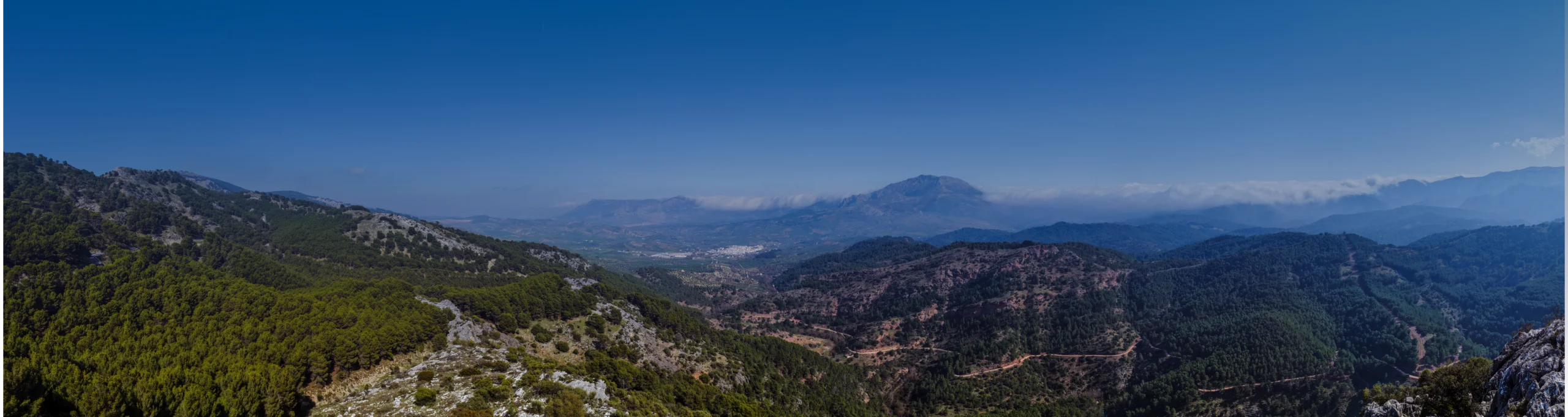
The Sierra de las Nieves National Park, designated in July 2021, is one of the most unique sites in Andalusia, thanks to its distinctive geology and exceptional botanical diversity.
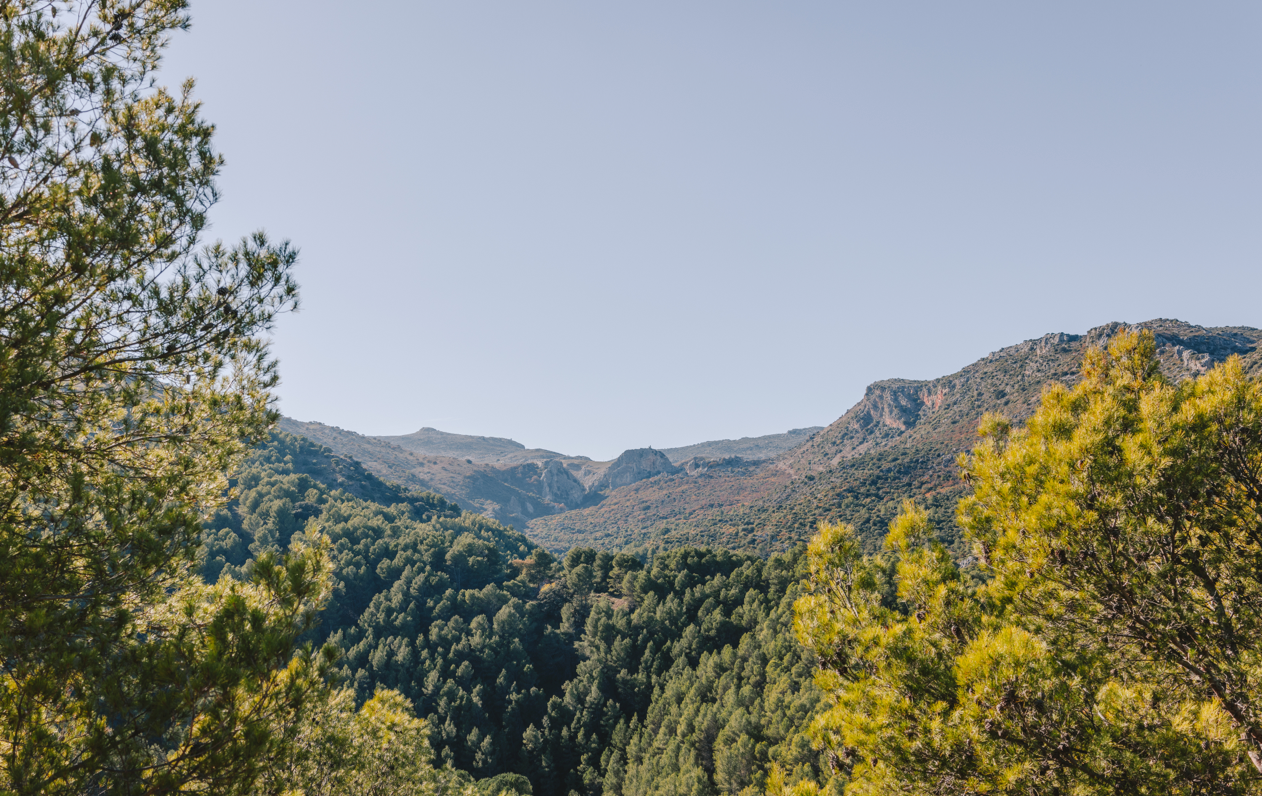
Notable features include the beauty of its karst landscapes, the uniqueness of the peridotite outcrops, and the presence of Abies pinsapo, a fir tree that also grows in the Andalusian protected areas of Sierra de Grazalema, Los Reales de Sierra Bermeja, Sierra Blanca, and Sierras Bermeja and Real; which together constitute the world’s only populations of this species, which is closely related to the fir trees found in northern Morocco.
The region is also home to a rich cultural and historical heritage, where the earliest traces of human habitation from prehistoric times overlap with the legacies of the Phoenicians, Iberians, Romans, Visigoths, and, above all, the Muslims. The Al-Andalus and Mudejar legacies include farmsteads, rural “castles,” towers, and fortified enclosures in urban settings, a rich tradition of place names, as well as significant agricultural and industrial transformations resulting from the use of water, which reshaped the landscape by creating new irrigated areas through the use of irrigation ditches, reservoirs, cisterns, waterwheels, flour mills, and fulling mills for cloth.
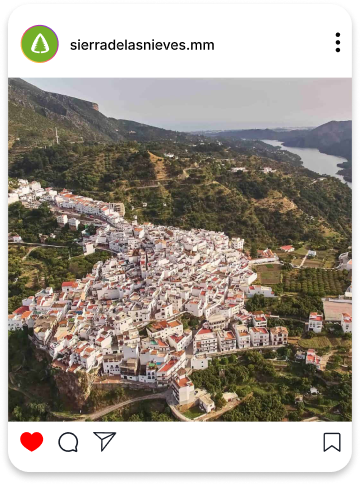
Covering 22,979.76 hectares, it is located in the western part of the province of Málaga, in the natural region of the Serranía de Ronda, and includes the municipalities of Benahavís, El Burgo, Istán, Monda, Parauta, Ronda, Tolox, and Yunquera, as well as those that make up its peripheral protection zone: Alozaina, Casarabonela, Guaro, Igualeja, Ojén, and Serrato.
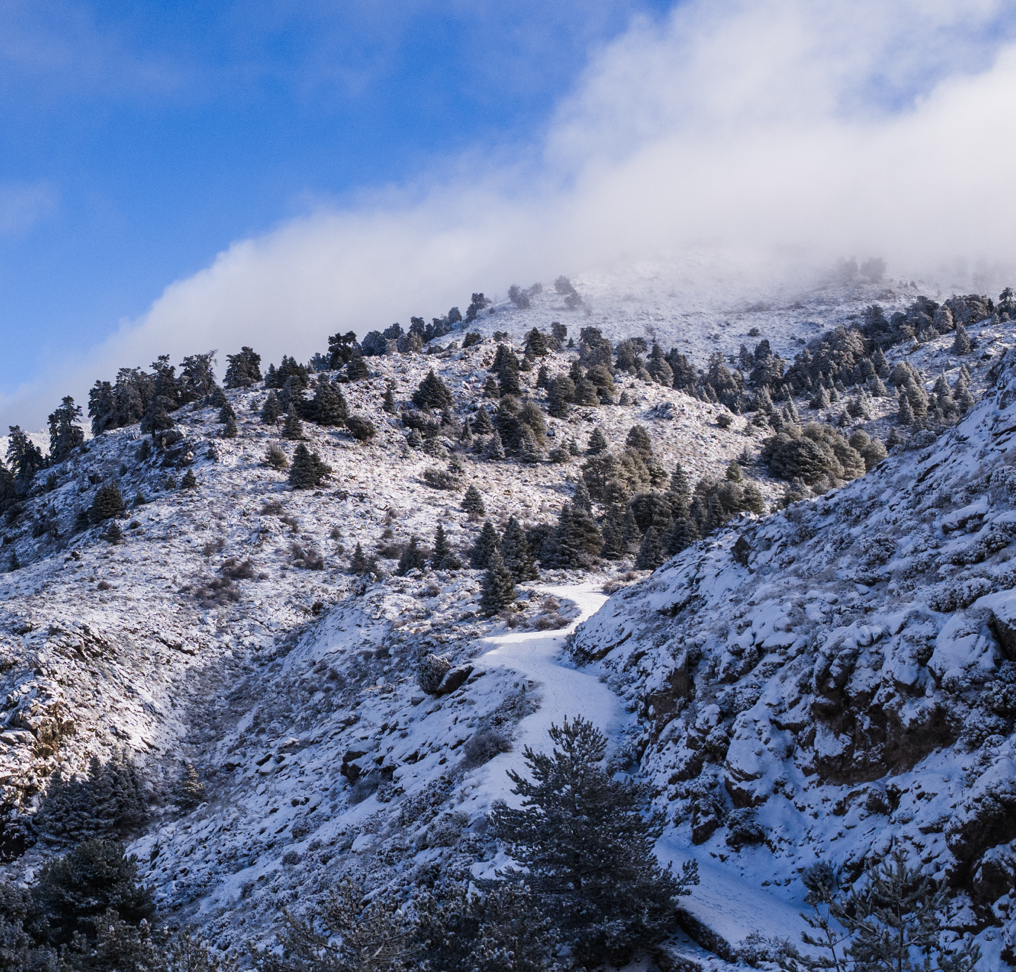
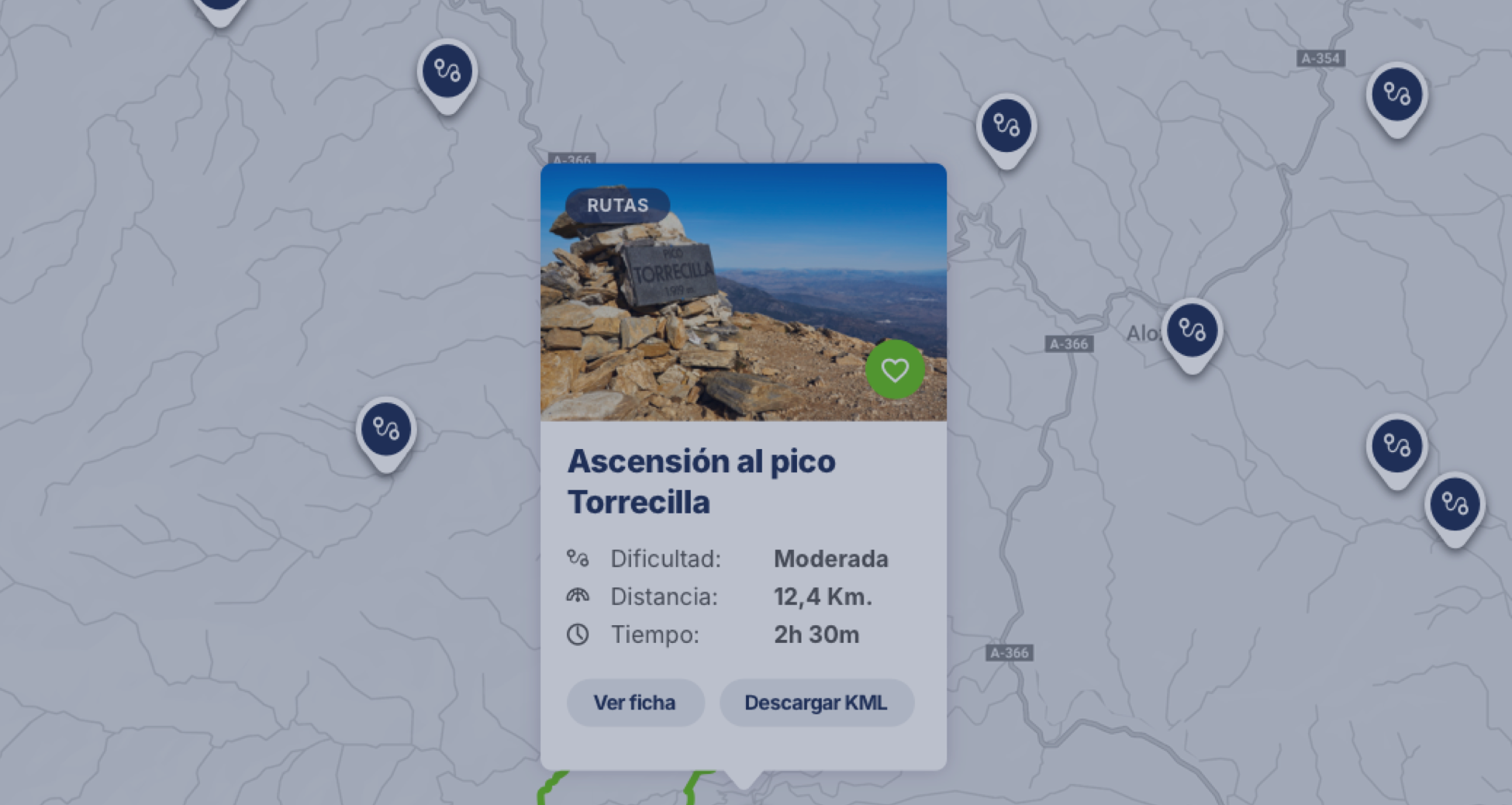
In this mountain range, we can distinguish the white limestone peaks from the reddish peaks composed of peridotite. The contrasts within this mountain range allow us to travel from Torrecilla Peak (1,919 m)—the highest peak in western Andalusia—to the GESM chasm, which, at 1,101 meters deep, is the deepest in Andalusia and the thirteenth deepest in Spain.
The strategic geographical location of the Sierra de las Nieves and its altitudinal range are responsible for its high biological diversity. The flora inventory includes more than 1,400 plant species, 15 of which are threatened, such as the Spanish fir, the high-mountain gall oak, and the thick-stemmed tobacco plant. As for fauna, there are nearly 200 species of vertebrates, 14 of which are listed in the Andalusian Catalog of Threatened Species, notably bats and dragonflies. The mountain goat, associated with the mountainous nature of these ranges, is one of the area’s most iconic species.
Antecendentes: propuesta de declaración
Confluencia con otras figuras de protección
Planificación: PORN y PRUG del Parque Natural Sierra de las Nieves
Planificación: Plan de Desarrollo Sostenible (PDS) del Parque Natural Sierra de las Nieves
Oficinas y centros de visitantes
Normativa
Actividades y resultados
Publicaciones

 Mancomunidad