Through their centuries-old, millennia-long interaction with their natural environment, the people living in the Sierra de las Nieves World Biosphere Reserve have developed a range of traditional crafts and ways of utilizing natural resources, which form part of their intangible cultural heritage.
The resources provided by nature have been shaped and transformed by human hands over thousands of years to meet human needs, with technical knowledge passed down from parents to children, from generation to generation, from century to century…
Although the use of plant fibers such as esparto grass, palm, sedge, and cane stands out, the work with wood, cork, leather, and clay also met the daily needs of these communities. The arrival of new materials, particularly plastic, nearly caused thousands of years of knowledge and artisanal tradition to disappear; however, these traditions have managed to survive by exploring other avenues, such as tourism.
Today, handicrafts represent one of its most valuable—and at the same time, most fragile—cultural expressions.
As we mentioned, the use and processing of certain plant fibers, such as esparto grass and palm fibers, has been most widespread throughout the Sierra de las Nieves World Biosphere Reserve, given their abundance in a region that is highly conducive to the growth of these types of plants.
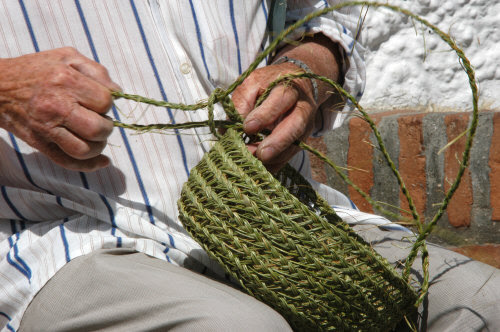
Their work—from harvesting, through processing, to shaping the material into all kinds of items and household goods for daily life—was always very hard. These plants had to be harvested by hand in the mountains at specific times of the year. They were then treated in preparation for further processing. Some were left to dry, while others—which were to be used for specific items—were soaked in water for days or weeks.
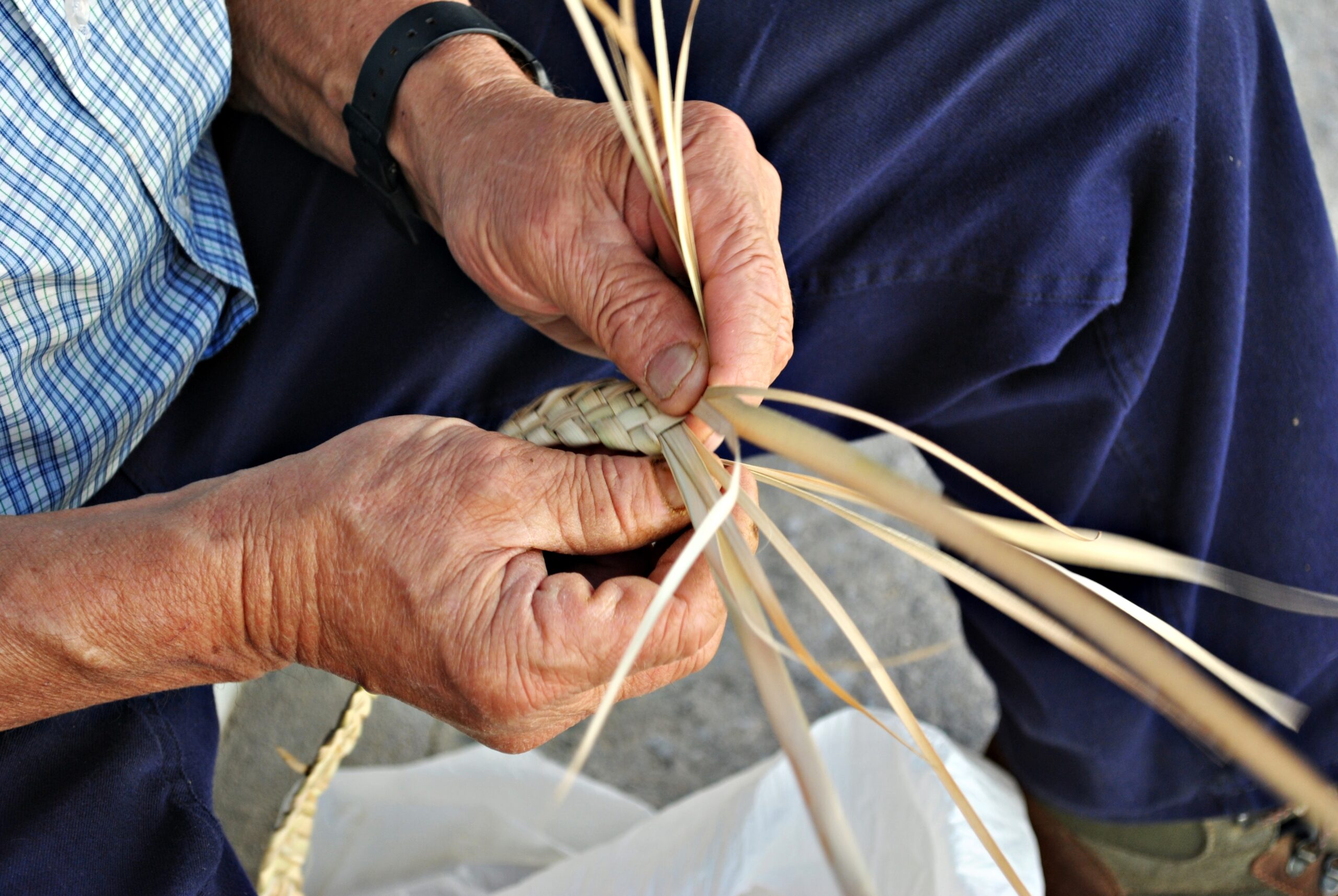
Using esparto grass and the braiding technique, once dried, they made baskets, discs for oil mills, hay racks, hay baskets for animals, mats, and slats for wattle fences… while when moistened and pounded, it was used to make ropes, espadrilles, slings… Palm fronds were used to make baskets, hats, and cones… In addition to the value of these ancestral techniques, let’s not lose sight of the fact that a language was used that is now being lost and that forms part of our cultural heritage.
The work involving these plant fibers—which also included sugarcane, sedge, and, to a lesser extent, rush—was carried out by poor families and day laborers. A great many women were engaged in this work. In many cases, entire families—having no steady job or farmland—were forced to sell their labor by any means necessary and at any price.
The craft of working with plant fibers is a treasure trove of memory and intangible cultural heritagethat has been part of this land’s identity for thousands of years.
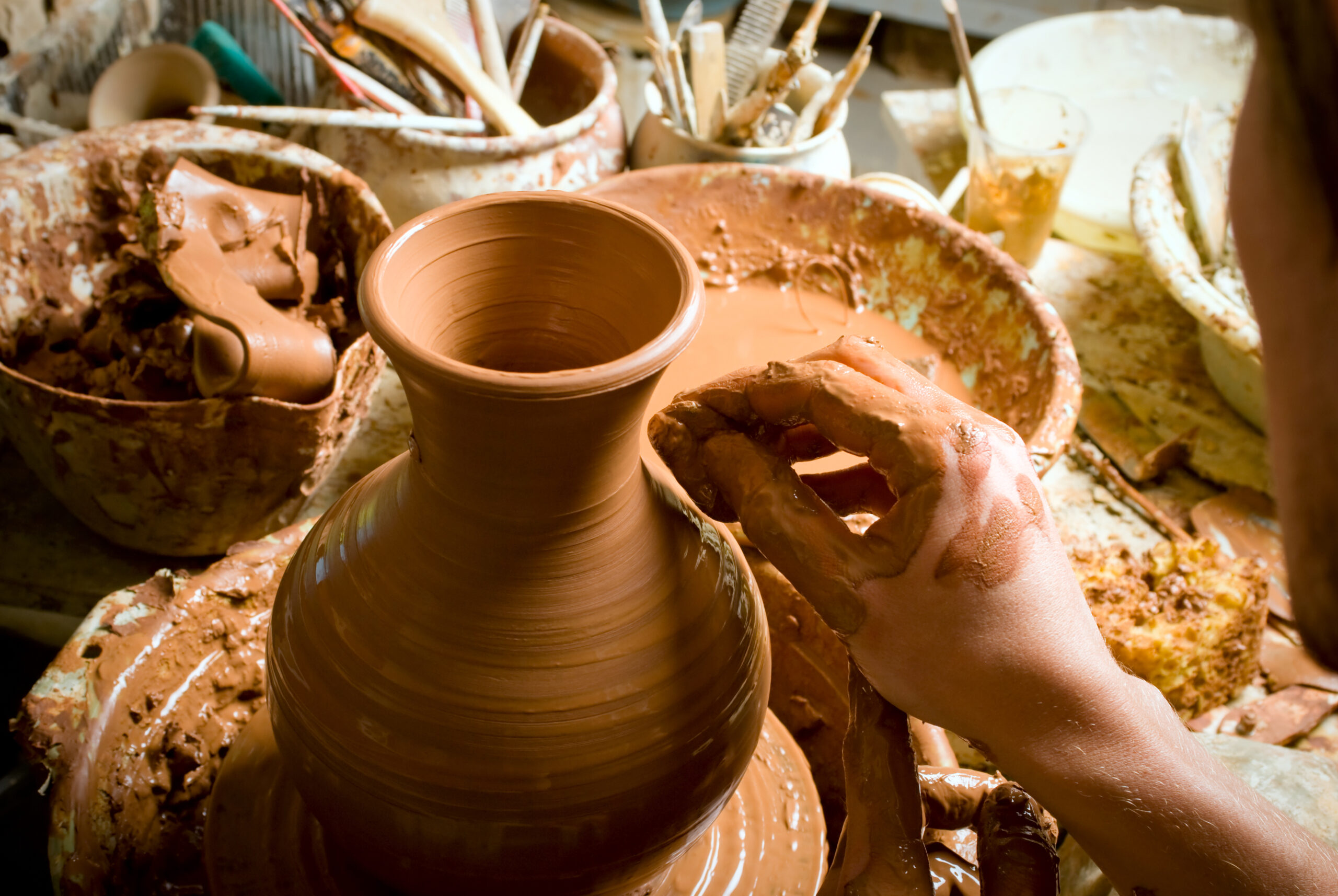
In the Sierra de las Nieves, the most significant pottery tradition has been the production of building materials, primarily roof tiles and bricks. In many of these towns, there were modest tile kilns that produced the roof tiles used to cover many of their homes and the facades of their most important buildings.
There were brickworks in Monda and Alozaina, where they still stand as a remnant of a trade that has completely disappeared. We know there was another one in Yunquera, which almost certainly supplied the bricks used to build its “Castle”—the well-known Yunquera Watchtower—where a clash took place between French and Spanish forces during the War of Independence.
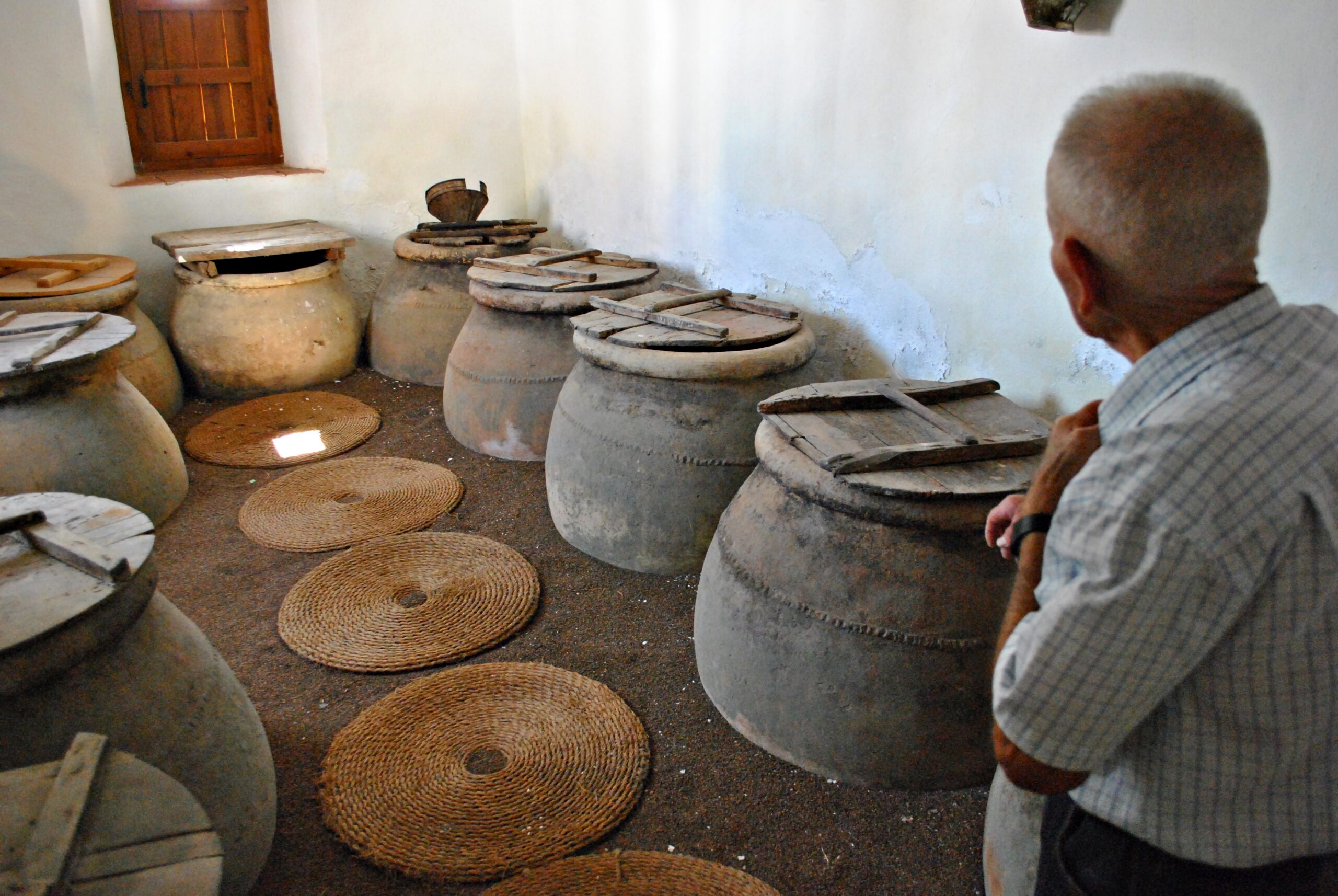
But true to their resilient spirit, the people of the Sierra de las Nieves have managed to redirect their work with clay toward traditional pottery. In Alozaina, for example, there are initiatives aimed at reviving traditional pottery, keeping alive a craft that combines technique, patience, and sensitivity. Of particular note is the Cerámica Pascual Cózar workshop, dedicated to the production of traditional pottery and the preservation of the region’s intangible cultural heritage related to this craft, where hands-on workshops are also offered.
For visitors, stepping into a pottery studio means discovering a different rhythm. It means seeing how a simple material is gradually transformed into a one-of-a-kind piece.
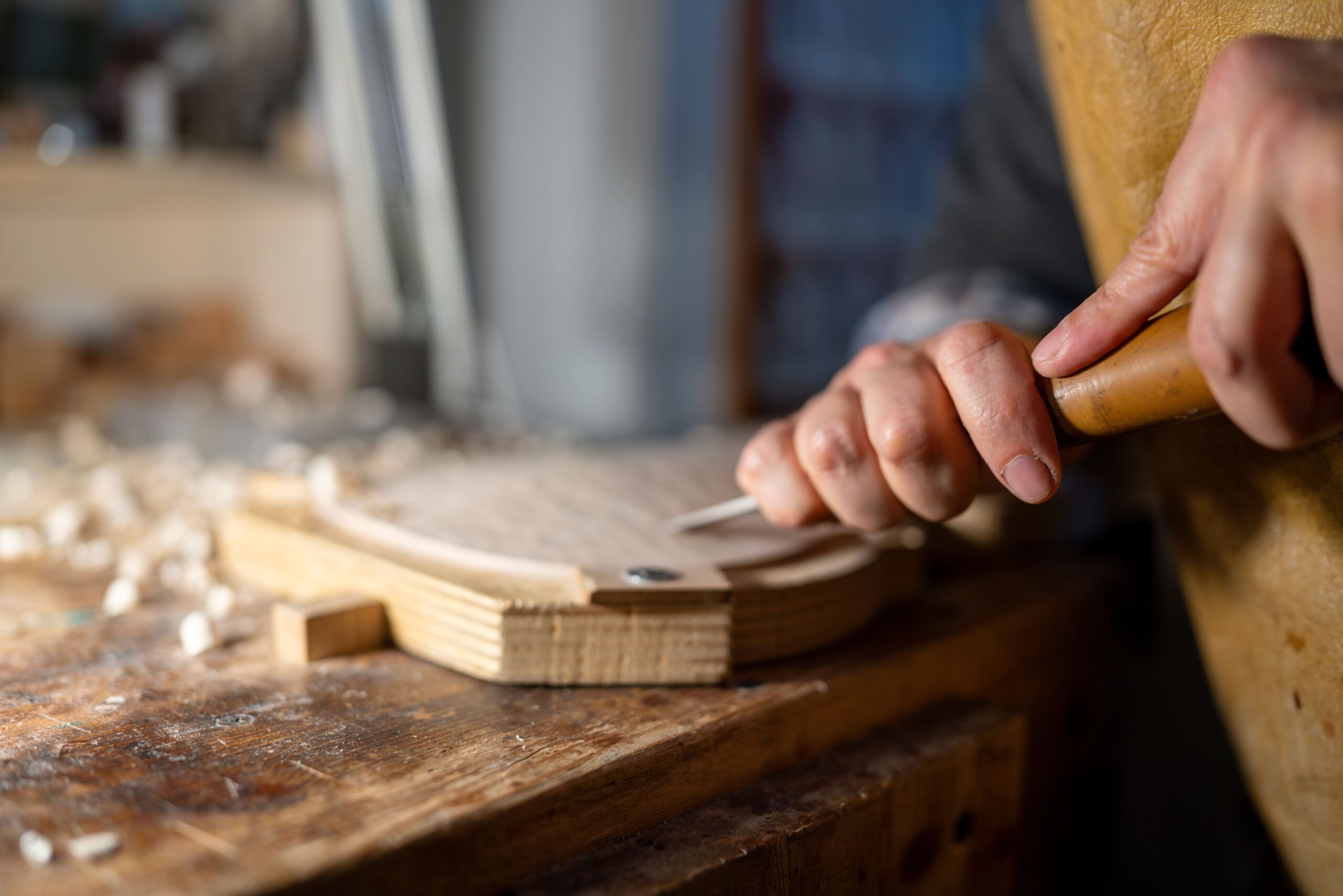
Other materials widely used in handicrafts have been wood, cork, and leather, for making tools to tackle farm work and daily life. Wood has been used to make a wide variety of household items such as wooden spoons, forks, benches, tables, laundry boards… and tools for daily work: threshing tools, other implements… Cork, in addition to being used for a wide variety of items, was also used to build beehives until very recently. Leather was primarily used for harnesses for animals and beasts of burden. These items can be seen in the various folk art museums located in the Sierra de las Nieves.
Many trades were practiced in the Sierra de las Nieves, many of which have since disappeared. Blacksmiths, in their forges, shoed draft animals, repaired farming tools, and made plowshares… There were saddlers who made harnesses for pack animals, a tradition that gradually faded as certain trades disappeared.
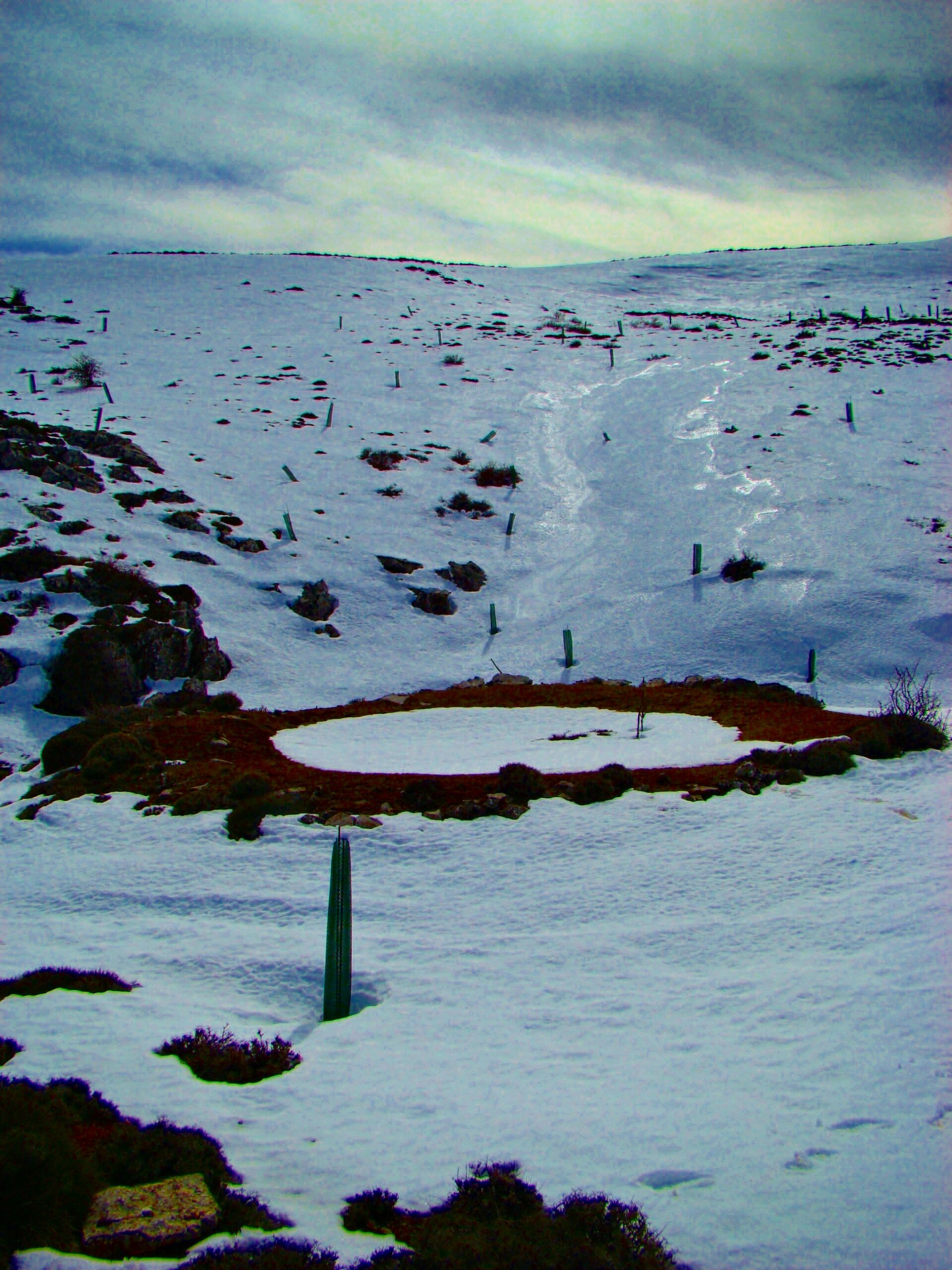
Of all the trades, perhaps the most unique is that of the “nevero,” or ice laborer. The neveros would go to the Sierra de las Nieves after snowfalls to pack and compress the snow into pits until it turned into ice. The pits were circular stone structures about eight to ten meters in diameter, dug about two meters into the ground. The ice remained there until summer, when it was removed and transported to various locations for consumption. From here, ice was supplied to Málaga, Seville, Cádiz… but also to Ceuta, Tarifa, Algeciras, and many other towns.
Alongside traditional crafts, the Sierra de las Nieves World Biosphere Reserve is now a hub for new forms of artistic expression. Today’s crafts engage with design, interior decoration, and contemporary art, offering visitors open and vibrant cultural experiences.
Events such as the Alozaina Art and Crafts Route bring together artists from various disciplines who open the doors of their studios to the public, complementing the tour with exhibitions, live music, and family-friendly activities. Meanwhile, initiatives like Art Tolox transform the town into a dynamic meeting point between art and nature, bringing performances, concerts, and outdoor exhibitions to the rural landscape.
These proposals demonstrate that craftsmanship is not merely an echo of the past: it is the present, innovation, community, and a way of reinterpreting tradition through new forms of expression.
Local crafts offer one of the many ways to connect with this region and to internalize it, through the use of local materials, the application of ancestral techniques and artisanal knowledge, and by embodying a history of their own.
Taking home a handcrafted piece from the Sierra de las Nieves is much more than just buying a souvenir: it’s preserving a legacy. Through fairs, traditional markets, small shops, and local workshops, visitors will discover unique objects, crafted from natural materials using techniques passed down from generation to generation. Each piece tells a three-dimensional story: that of the hands that shaped it; that of the material from which it is made; and that of the land that inspired it.
The artisanal products of the Sierra de las Nieves are made from local materials. Therefore, purchasing local handicrafts helps, first and foremost, to preserve traditional crafts that would otherwise have disappeared, and second, to preserve the unique landscapes from which these materials are sourced and transformed.
Beyond its landscapes, forests, mountains, and rivers, the Sierra de las Nieves World Biosphere Reserve has so much to offer. And local crafts serve as a magnificent gateway to discovering the local folk culture, its traditions, and what life was like in a not-so-distant past.
Visiting workshops, participating in activities, exploring art trails, buying local products, or simply watching an artisan at work are all ways to connect with the essence of the region.
In this region, craftsmanship still has hands, faces, names, and memories. And that makes it an authentic experience for those seeking more than just a visit: the chance to take home a living piece of the mountains.

 Mancomunidad