Bio+A Málaga promotes the bioeconomy and sustainability in the Sierra de las Nieves through a comprehensive training program tailored to the region
Accredited training for more than 120 people, including internships in real-world settings at local public entities, in collaboration with public and private organizations involved in environmental and social management and the use of biomass in the region between August and December 2025
The Bio+A Málaga project is becoming a hub for innovation and sustainability in the province, particularly in the Sierra de las Nieves region. With more than 33,000 hectares of public forests in need of management, this initiative promotes an adaptive forest management model focused on optimizing resources and addressing climate change through training.
The Sierra de las Nieves National Park and Biosphere Reserve, with its unique environmental richness, is the perfect setting for the launch and development of this project, which involves various organizations under the coordination of the Málaga Provincial Council.
Notable partners include the University of Córdoba, the Official Association of Forest Engineers, the Spanish Red Cross, and the Association of Municipalities itself, all of which play a key role in its development.
Bio+A is supported by the Biodiversity Foundation of the Ministry for Ecological Transition and the Demographic Challenge (MITECO) as part of the Recovery, Transformation, and Resilience Plan (PRTR), funded by the European Union—NextGenerationEU.
Education and Training: The Cornerstone of the Project
One of the key aspects of Bio+A Málaga is its comprehensive training program, designed to train more than 120 people in various professional roles related to forest management and the bioeconomy.
The training program “not only aims to create quality jobs in rural areas, but also to strengthen the resilience of local communities in the face of depopulation and environmental risks such as wildfires. In addition, it incorporates cross-cutting training on gender equality, digitalization, occupational safety, and healthy lifestyle habits, preparing participants for the sector’s current and future challenges.”
In the words of José Miguel Marín, president of the Sierra de las Nieves Association of Municipalities and mayor of Istán, “This project not only represents an urgent response to environmental challenges, but also an opportunity to positively transform the socioeconomic fabric of Sierra de las Nieves and its surrounding areas. Through innovation, training, and cooperation, Bio+A Málaga is set to become a model of sustainable and equitable development.”
Ongoing Training
The Association of Municipalities of Sierra de las Nieves—in collaboration with the Málaga Provincial Council and the other project partners—is primarily responsible for launching a training program tailored to the region’s actual needs. This program focuses on activities such as silvicultural improvement and forest harvesting, which require qualified personnel to ensure the safe, effective, and sustainable management of our natural resources.
To this end, Mancomunidad has a budget of 329,185 euros, which has been used to design a training program in, for, and by the region.
This program is primarily aimed at residents of the Sierra de las Nieves, although it remains open to participants from other municipalities in the province. It offers accredited training for more than 120 people, including internships in real-world settings at local public entities (the Association of Municipalities and its town halls), in collaboration with public and private organizations involved in environmental and social management and the use of biomass in the region.
The program consists of a specific training package covering five professional profiles and cross-cutting training that all students enrolled in each of the specific training programs will complete.
The program is structured around five key professional profiles that cover all stages of the biomass production process : 1) Forest conservation and improvement; 2) Forest harvesting; 3) Operation of machinery related to the extraction, harvesting, and utilization of forest biomass; 4) Logistics, marketing, and processing of forest products and byproducts; 5) Installation and maintenance of boilers.
The specific training will be divided into two sections:
Longer-term training programs leading to Level 1 Professional Certificates in the Agricultural and Forestry fields , aimed at unemployed young people with the goal of facilitating their entry into the workforce. Fifteen students will participate in each of these certificate programs. There is a possibility that students may be hired under a work-study training contract as student-workers, pending approval by the Biodiversity Foundation. This training will take place between August and December at the Pinsapo Training Center in Yunquera, with fieldwork conducted in the region’s natural environment.
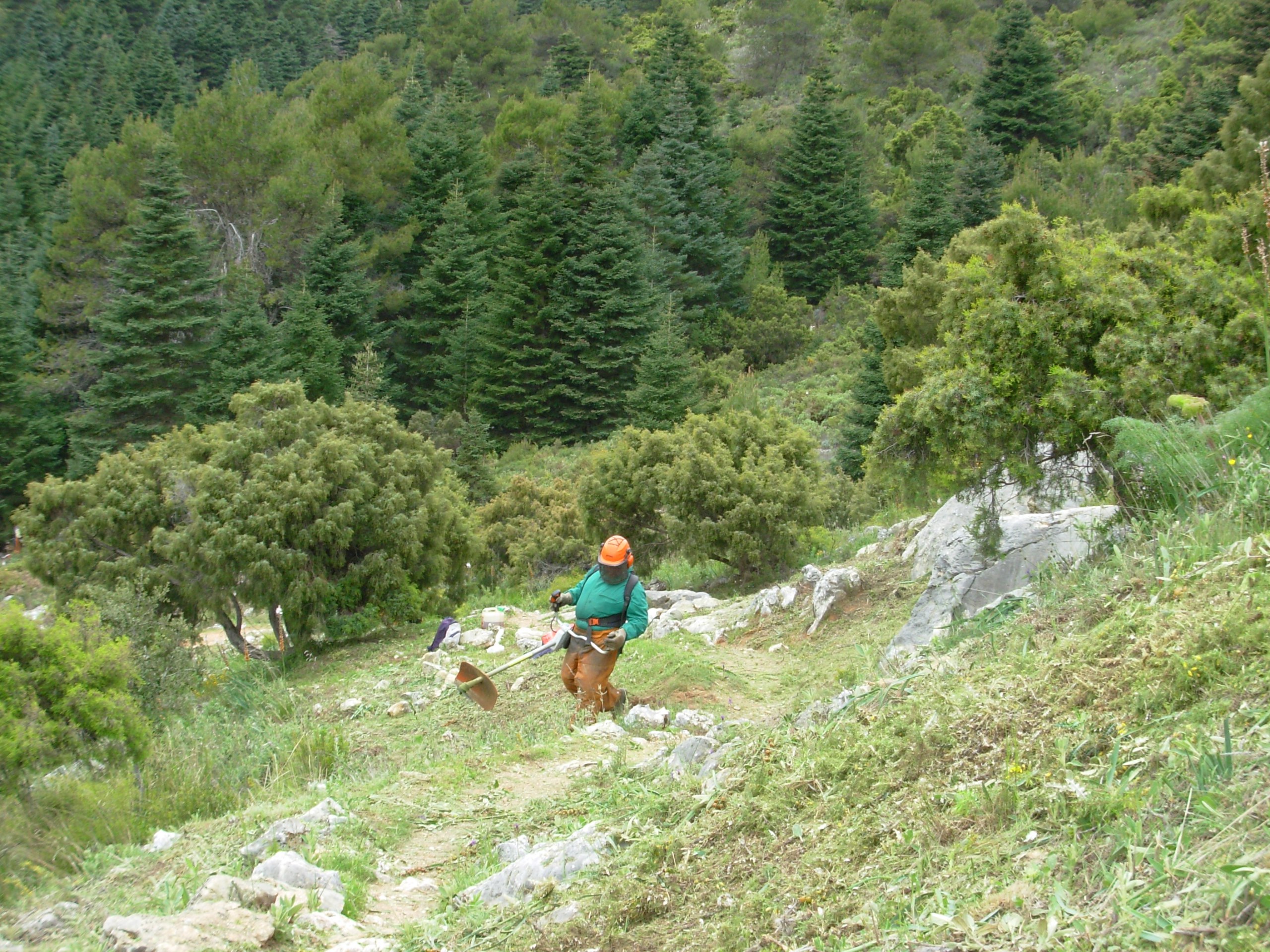
In addition, short-term specialized technical training courses will be offered in very specific, in-demand skills: the use of forestry machinery (chainsaws and brush cutters) and the operation of biomass boilers. These training programs are aimed at both currently employed workers and unemployed individuals, and will be held in various municipalities to facilitate access for participants between September and November.
Training in the installation and maintenance of biomass boilers is currently being designed and will be carried out in collaboration with GRUPO TRAGSA, the entity responsible for the facilities, and with the support of the manufacturers of the biomass boilers installed in the region (KWB and Hargassner). This theoretical and practical training will take place at the municipal boiler sites themselves, incorporating the use of digital tools and placing special emphasis on training municipal operators—a pressing need for our municipalities—as well as technical companies in the region.
“The impact of this program—and, ultimately, the project itself—will be carried forward through other initiatives that follow the same strategic direction, reinforcing our region’s role as a provincial driver of ecological and social transformation, marking a major turning point in this regard,” notes Marín.
In this case, the construction of the Biomass Lab, as outlined in Action 5 of the project, includes an environmental training classroom as well as a forestry workshop, both of which are fully equipped to support the certification of vocational qualifications at various levels.
The president of the Association of Municipalities states that “with all of this, we are making a firm and clear statement of intent: we want specialized training in forestry, biomass, and—ultimately—environmental and agricultural fields to take place in the setting where it will be applied—here, in the Sierra de las Nieves—and not just in the big cities. We are committed to a decentralized model that not only combats rural depopulation but also offers real solutions to urban overcrowding. Because training, employing, and helping people put down roots in this region is not just a necessity—it is an investment in the future that we believe is essential and that we are prepared to lead.”



 Mancomunidad