The Sierra de las Nieves is one of Andalusia’s great botanical sanctuaries, and its extraordinary biodiversity makes it one of the world’s most important natural areas, as evidenced by its designation as a Biosphere Reserve; and most of that natural wealth lies in its flora.
Its rugged terrain, varied soils, the altitude of its mountains, and the influence of the Mediterranean climate and the Atlantic Ocean have created a region of extraordinary plant diversity, where unique forests coexist: Pinsapares, cork oak forests, holm oak forests, gall oak forests, chestnut groves, extensive native and reforested pine forests; Mediterranean scrublands, cool riverbanks, and rock-dwelling and mountain flora of great interest, the most distinctive feature of which is the mountain gall oak.
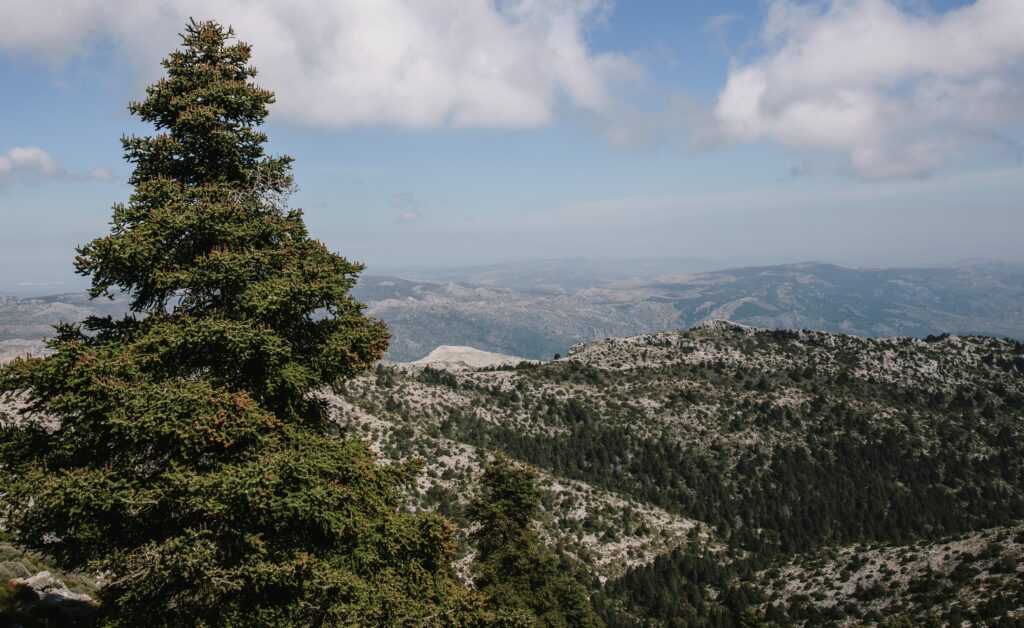
But the Pinsapo and the Pinsapar are the great symbols of this region’s flora and vegetation; they are conifers belonging to the fir family, unique trees whose origins date back to the last ice age and for which these mountain ranges serve as one of their most important refuges. Its conical shape, dark green color, and small, prickly needles give it an unmistakable appearance.
The inhabitants of the Sierra de las Nieves have known about and made use of this tree since ancient times. Spanish botanists such as Simón de Rojas Clemente had already described it and affirmed its botanical importance in the early 19th century, but it was not until it was officially described by Charles Edmond Boissier following his botanical expedition to southern Spain in 1837, introducing it to the international scientific community, did it gain the fame and importance it holds today.
The pinsapo forests of the Sierra de las Nieves are among the most valuable in the world and form one of the National Park’s most distinctive landscapes. The Ministry for Ecological Transition and the Demographic Challenge (MITECO) highlights that this area preserves the world’s largest pinsapo forests—complemented by the forests in the nearby Grazalema and Bermeja mountain ranges—along with high-mountain flora, serpentinite ecosystems—between the Sierra Bermeja and the town of Carratraca lies Europe’s largest peridotite outcrop, covering an area of about 450 km²—and a high level of biological diversity typical of Mediterranean mountain systems.
Walking beneath a Spanish fir is one of the most special experiences the Sierra de las Nieves has to offer. Light filters through the dense branches, the atmosphere grows cooler and quieter, and visitors feel as if they are entering an ancient forest, almost frozen in time. This tree, of great ecological value, has become the hallmark of the National Park.
The flora of the Sierra de las Nieves is not limited to the Spanish fir. The altitudinal gradient of its mountains means that the area contains a wide variety of substrates and microclimates, the combination of which gives rise to an enormous diversity of plant life.
These differences in elevation, climate, and soil conditions allow us to find various vegetation zones, distributed along the slopes according to climatic factors such as temperature, annual precipitation, and sun exposure.
As you climb or travel through its various valleys and slopes, the vegetation changes.
Along the riverbanks, there is a wide variety of riparian species: black poplars and white poplars, elms, willows, osier, and tamarisk, forming dense shrubby stands.
In the lower, sunnier areas, holm oaks, carob trees, wild olive trees, kermes oaks, strawberry trees, mastic trees, rockroses, kermes pines, rosemary, thyme, and other aromatic plants fill the air with the scent of the Mediterranean.
In more humid and shaded areas, species such as cork oaks, maples, gall oaks, yews, holly, and junipers can be found.
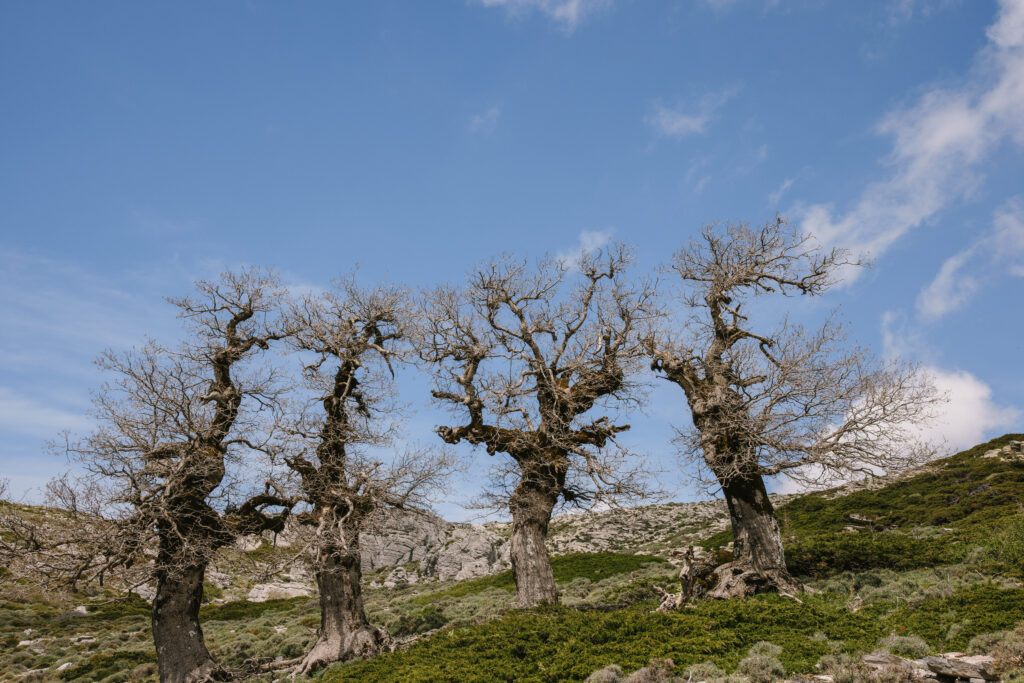
In the high mountains, the mountain gall oak is the dominant species. This unique tree, classified as an endemic subspecies of the Sierra de las Nieves, is listed as an endangered species.
Among the shrubs, we can highlight the Spanish juniper and the common juniper—which take on different growth habits depending on their location—; mastic, cornicabra olive, kermes oak, blackthorn, and hawthorn are abundant species that also grow to a large size; broom, palm-leaved broom, wild roses, and various species of heather; many different species that share a distinctly prickly nature: gorse, nun’s cushion, ergen, and various species of broom; many species of rockroses—sticky and white—jaguarzos, and matagallos; oleanders, reeds, cattails, rushes, and bulrushes along the banks of rivers and streams; among the very small shrubs are rosemary, various species of thyme, and chamomile, which fill the air with their characteristic scents.
Among the rock-dwelling and climbing species that grow on rocky substrates, many are of great botanical value, such as linaria, centaurea, and arenaria—true rarities found almost exclusively in this region. We can also mention the stinking hellebore, shepherd’s spoon, saxifrage, and biscutella. Another group of climbing species includes brambles, wandering bane, honeysuckle, and ivy.
Given the enormous variety of herbaceous species, we would like to highlight the peony (or wild rose), various species of foxgloves, orchids, lilies, and daffodils.
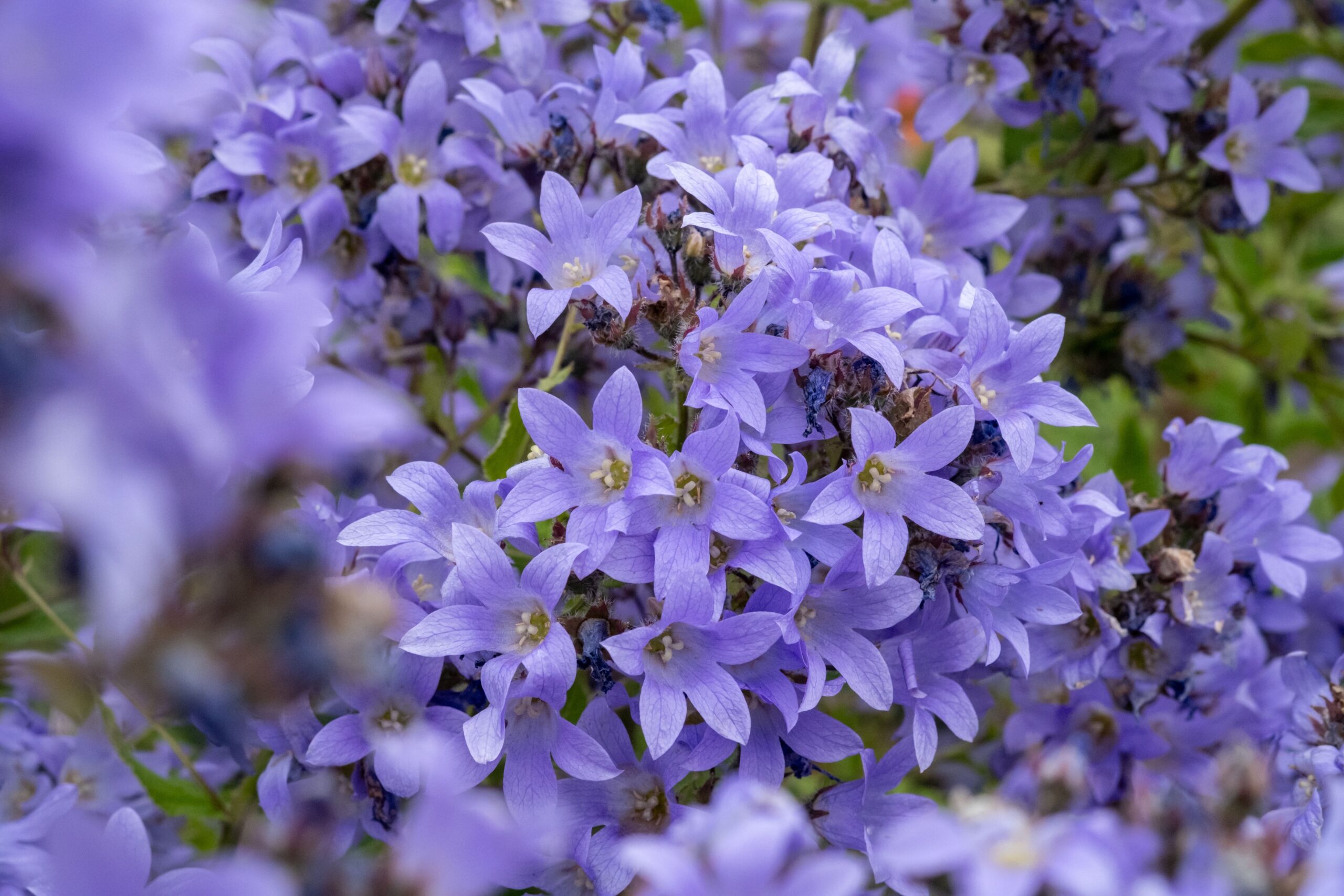
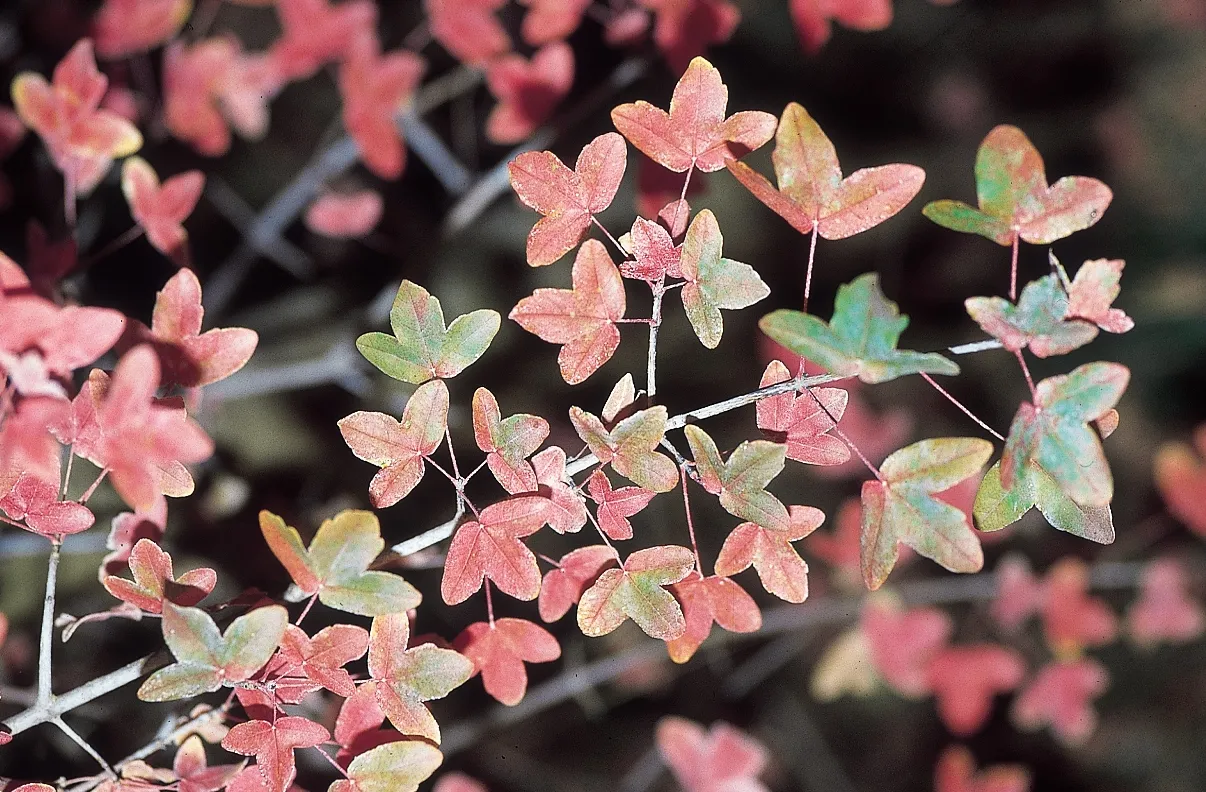
The National Park’s flora catalog includes species such as the Montpellier maple, the Granada maple, heathers, bellflowers, and the Santa Lucía cherry, among many others.
This variety ensures that each trail offers a unique experience. In spring, the trails are filled with flowers, colors, and scents. In summer, the hardiest species demonstrate their ability to adapt to the heat. In the fall, the deciduous forests take on shades of gold and red. And in the winter, the mountains return to their rugged nature, with fog, occasional snow, and landscapes of great beauty.
The Sierra de las Nieves region forms part of the great mountain range known as the Baetic System, in its westernmost section.
One of the most distinctive features of the Sierra de las Nieves is the presence of different types of rocks and soils. Clay soils, limestone areas, peridotite soils, and high-mountain regions create a wide variety of conditions for plant life. This geological diversity fosters the emergence of highly specialized species and plant communities of great interest.
The ecosystems associated with soils derived from peridotites—one of the region’s greatest geological treasures—are particularly important due to the presence of plants adapted to harsh conditions. These are areas where the vegetation appears more austere, yet they harbor a great deal of ecological uniqueness.
For this reason, the flora of the Sierra de las Nieves is not only of scenic value. It is also of great scientific, educational, and environmental interest. It is an ideal destination for those who enjoy botany, nature photography, interpretive hiking, and responsible tourism.
The vegetation also tells the story of the traditional way of life in the villages of the Sierra de las Nieves. Centuries-old holm oaks and olive trees, almond trees, chestnut trees, aromatic plants, and riparian species have been part of the local economy, diet, folk medicine, and traditional crafts for centuries.
Rosemary, thyme, chamomile, pennyroyal, esparto grass, palm, palm heart, fennel, lavender, rockrose, matagallo, chickweed, edible white thistle, and asparagus are all part of the everyday landscape that has been a constant companion to generations of mountain dwellers. Many of these plants have been used for cooking, healing, adding flavor, making tools, or feeding livestock.
Visiting the Sierra de las Nieves, therefore, means discovering a flora that not only beautifies the landscape but also helps us understand the identity of the region.



 Mancomunidad