The Sierra de las Nieves is a destination that can be enjoyed with all the senses, because visiting it is not only a physical experience but also a deeply enriching one on a personal and cultural level.
Its landscapes—vast and ever-changing with the passing of the seasons—invite you to pause, breathe in the fresh air, and look around slowly, without haste, through the eyes of a true traveler; a concept deeply rooted in human history that defines those who approach a place with humility, simplicity, and respect—eager to learn, soaking in everything around them, without preconceived notions or misconceptions about the place they wish to discover.
In this natural landscape, unique in the world, the high mountains, the mountain ranges, the forests, the ravines, the rivers and streams, the white villages, and the blue, clear, and open skies come together to create a succession of scenes that amaze visitors in every season of the year.
Exploring this region means discovering a natural world full of contrasts. There are mountain peaks from which the horizon seems to stretch on forever, ancient forests that envelop the landscape in silence, valleys where orchards, olive groves, and chestnut groves, ancient trails and paths that once connected the entire region and now serve as prime routes for active tourism, and natural lookouts from which the Sierra de las Nieves reveals itself in all its grandeur.
The landscapes of this natural area are not only beautiful; they also tell the story of a region shaped by the passage of time, by geology, by the climate, and by the balanced relationship between people and the natural environment on which they have always depended. Every hillside, every rock, every path, and every village is part of a living tableau that makes a visit here a memorable experience.
A mountain range of contrasts
One of the greatest natural treasures of the Sierra de las Nieves is its diversity. On a single hike, visitors can go from mid-mountain areas with Mediterranean vegetation to pinsapo forests, deep ravines, rocky slopes, high viewpoints, and white villages steeped in history perched on slopes that seem impossible to climb.
The terrain is one of the destination’s main attractions, with elevations ranging from just under 200 m to 1,919 m at Pico Torrecilla. The rugged contours and karst formations of the Sierras Blancas, composed of gray and light-colored limestone, contrast with the equally rugged Sierras Bermejas, with their reddish and green hues, which correspond to a large outcrop of peridotite rocks—another of the National Park’s unique features. In other areas, the terrain becomes gentler and takes on a rolling character, as these zones are composed of clayey materials primarily used for farming.
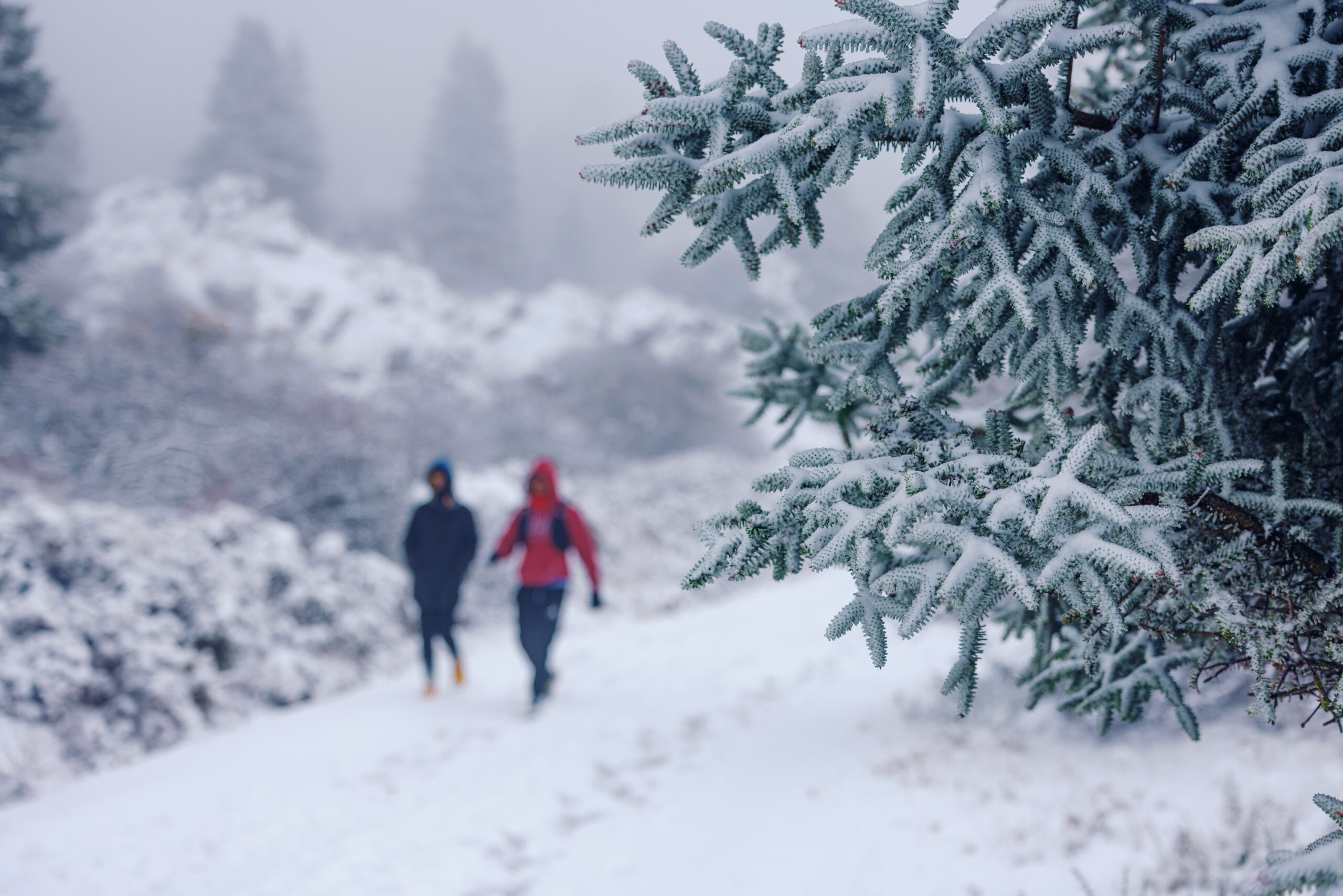
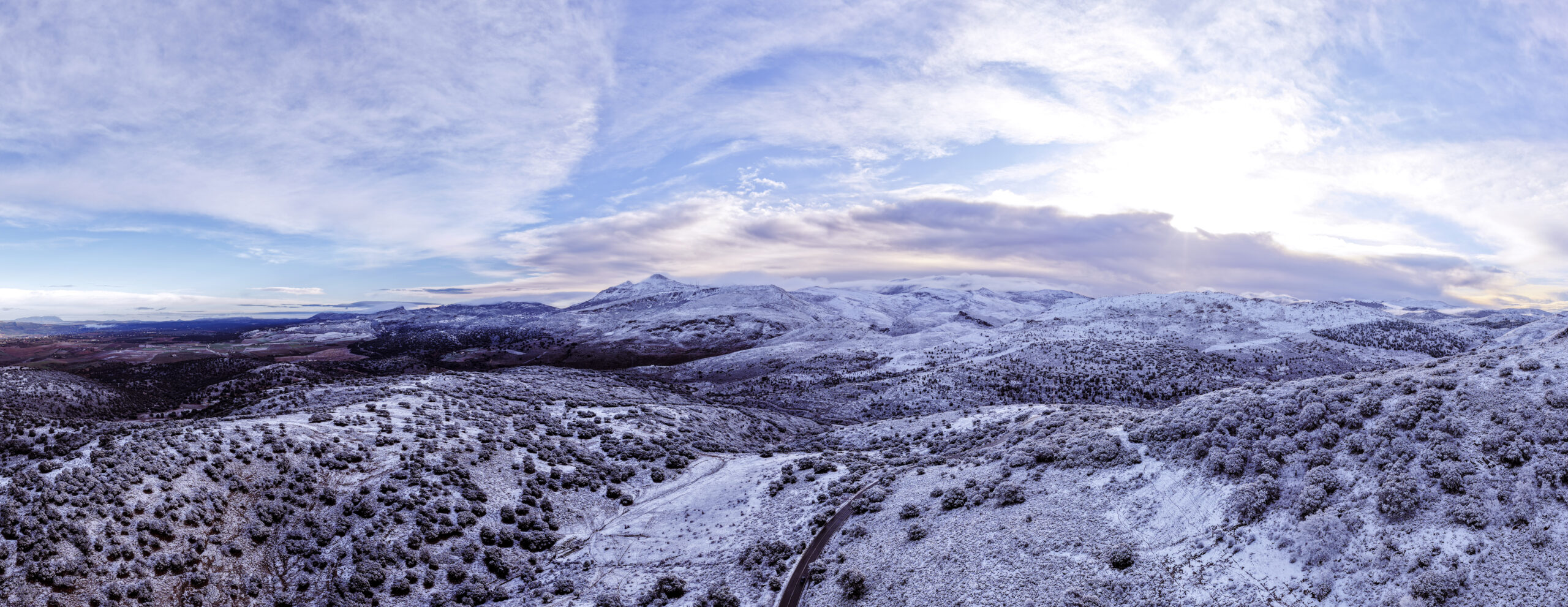
The gorges, ridges, mountain passes, and peaks offer spectacular panoramic views that change in color and atmosphere throughout the day. In spring, the landscape is filled with freshness, light, and greenery. In summer, the mountain range reveals its brightest and most open profile. In fall, the ochre and golden hues lend a serene beauty, and rainy days invite reflection and tranquility. And in winter, the fog, the cold, and, at times, the snow, reinforce the character of this unique region.
This interplay of contrasts makes every visit unique. There isn’t just one Sierra de las Nieves, but many: the one with its shadowy Spanish fir forests, the one with its open peaks, the one with the white villages, the one with mountain sunsets, and the one with trails that lead to unexpected corners and allow us to understand the history of this region, its customs, traditions, and trades linked to agriculture, livestock farming, and the ancestral use of the region’s natural resources.
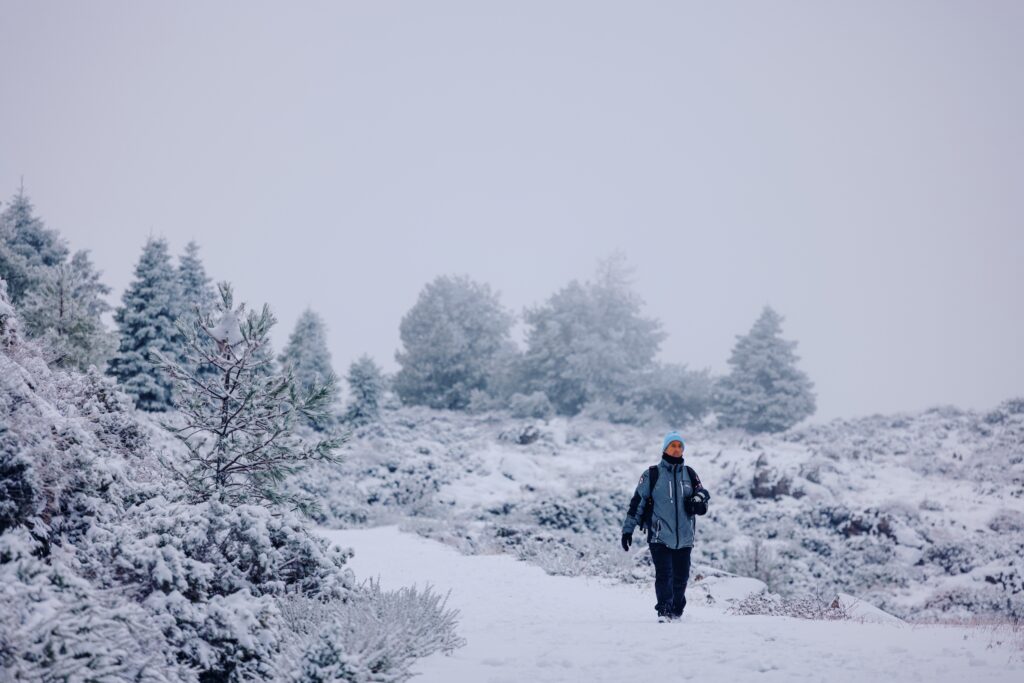
Sierra de las Nieves Trails, Winter, Pinsapo, Water Routes, Málaga, Sierra de las Nieves, Snow and Ice, Rural Tourism, Trails, Charming Routes, Andalusia, Parauta, Torrecill
Natural viewpoints to connect with the land
The Sierra de las Nieves is full of spots from which to take in the landscape in all its grandeur. Some are designated overlooks, while others are natural vantage points that appear at the end of a trail, alongside a scenic road, or on a hillside offering unforgettable views.
From these vantage points, visitors can admire mountain ranges, valleys, forests, villages, and mountain silhouettes that paint one of the most authentic pictures of the interior of the province of Málaga. These are ideal spots to take a break, snap some photos, take in the surroundings, or simply let the silence wash over you.
Many of these viewpoints offer a sense of the territory’s true scale. From above, one can better appreciate the contours of the mountains, the layout of the villages, the richness of the forests, the depth of the ravines, and the unique character of the mountain landscape. The experience of looking down from a high vantage point is not just aesthetic; it is also a way to interpret the place you are observing and wish to understand.
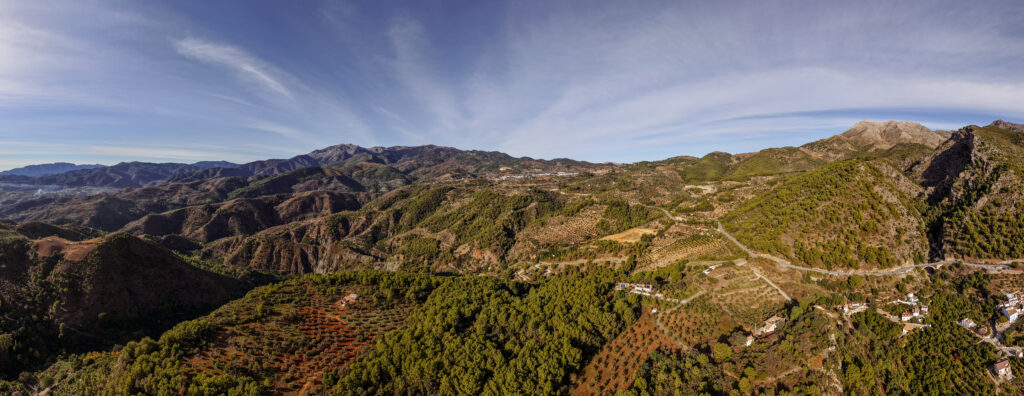
Jorox, Panoramic View of the Sierra de las Nieves in Fall
Peaks, trails, and unforgettable views
For those who enjoy hiking, the Sierra de las Nieves offers some of the most beautiful landscapes in Andalusia. Its trails lead to natural viewpoints and high vantage points from which the landscape opens up in every direction. Climbing to certain points on the mountains allows you to take in the mountain range from a broader, almost infinite perspective.
The trails wind through forests, mountain passes, hillsides, and high-mountain areas, making the journey itself part of the visual experience. It’s not just about reaching a specific destination, but about enjoying the journey—the changing light, the contrasts in the landscape, and the feeling of exploring an authentic, well-preserved region.
Each route offers a different perspective. Some are easy, perfect for families or leisurely strolls, while others are more challenging for hikers accustomed to the mountains. In every case, the landscape is your best travel companion.
White villages with a viewof the mountains
The landscapes of the Sierra de las Nieves can also be enjoyed from its villages. Towns such as Tolox, Yunquera, El Burgo, Alozaina, Casarabonela, Monda, Istán, Ojén, Parauta, and Igualeja offer spots from which to admire the surroundings from a different perspective.
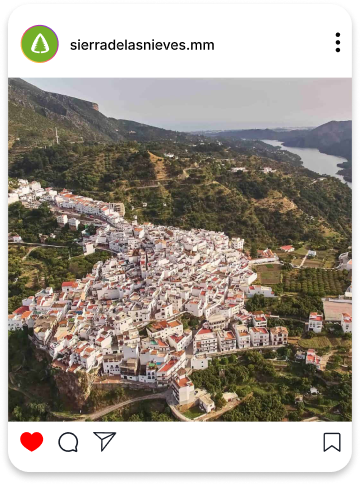
The squares, urban viewpoints, terraces, sloping streets, and entrances to the villages often become small balconies overlooking the mountains. From these vantage points, visitors discover the harmony between traditional architecture and the natural landscape: whitewashed houses, rooftops, bell towers, vegetable gardens, hills, and clear skies that come together to form a scene that is truly characteristic of the destination.
This blend of community and nature, which is one of the major attractions of the Sierra de las Nieves, is the result of the millennia-long interaction between its inhabitants and the natural environment on which they have historically depended; what has been and continues to be common practice in this region finds its theoretical basis in what is now known as sustainable development—a concept developed toward the end of the 20th century as an alternative to the conventional development model, which had disrupted the balance between humans and nature.
The development model that has been implemented in this region has successfully balanced the use of natural resources with the quality of life of its residents without jeopardizing the opportunities that this geographical setting offers future generations; this is the fundamental reason that allows us to understand that in the Sierra de las Nieves, the landscape is not viewed solely as a natural space, but also as an integral part of daily life in its municipalities.
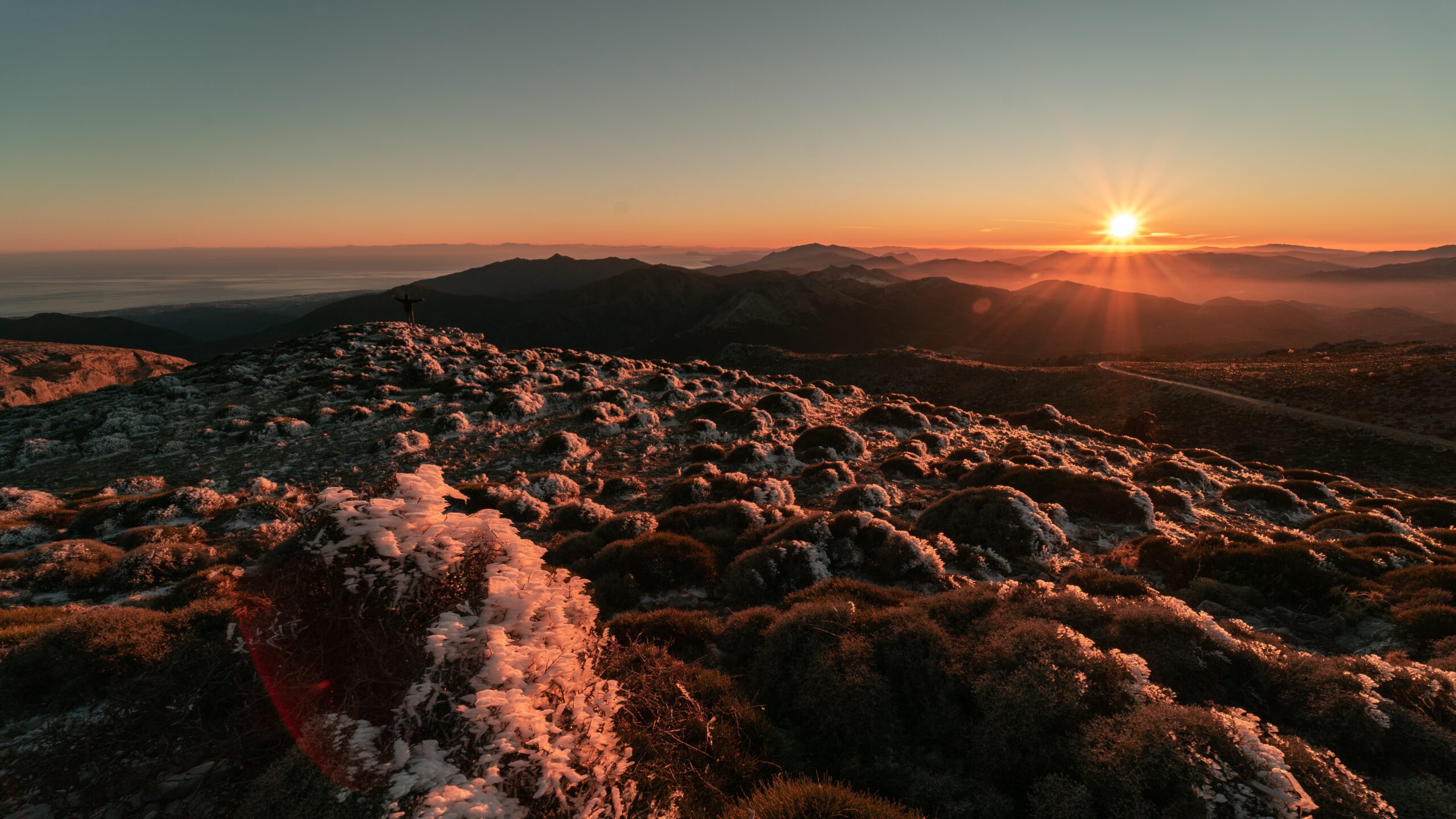
Sunsrises, sunsets, and mountain light
The light transforms the Sierra de las Nieves at every hour of the day. In the morning, the first rays of sunlight illuminate the peaks and gradually reveal the terrain. At midday, the landscape becomes sharper and more contrasted. And at sunset, the mountains take on warm hues, long shadows, and a particularly evocative atmosphere.
The viewpoints and landscapes of this region are perfect for savoring those moments when nature changes at a leisurely pace. Watching the evening light fall over the mountains, seeing the fog settle into the valleys, or witnessing the sun bathe the hillsides in golden hues are among the most memorable experiences this destination has to offer.
For those looking to capture those magical moments through photography, contemplation, or simply a break from the daily grind, the Sierra de las Nieves offers breathtaking settings where time seems to stand still.
A landscape to experience and respect
The landscapes and viewpoints of the Sierra de las Nieves are among its greatest treasures. That is why visiting them also means doing so responsibly. Walking on marked trails, respecting the flora and fauna, leaving no trash behind, and enjoying the surroundings at a leisurely pace are essential steps in preserving the beauty of the area.
Contemplating the landscape is part of a more mindful way of traveling. In the Sierra de las Nieves, it’s not just about seeing beautiful places, but about connecting with a natural and cultural environment that deserves to be discovered with respect.
Visiting its lookout points, hiking its trails, and taking in its panoramic views is an invitation to discover the mountain and its surroundings from a different perspective. An experience that brings together nature, silence, excitement, and beauty in one of Andalusia’s most unique landscapes.

 Mancomunidad