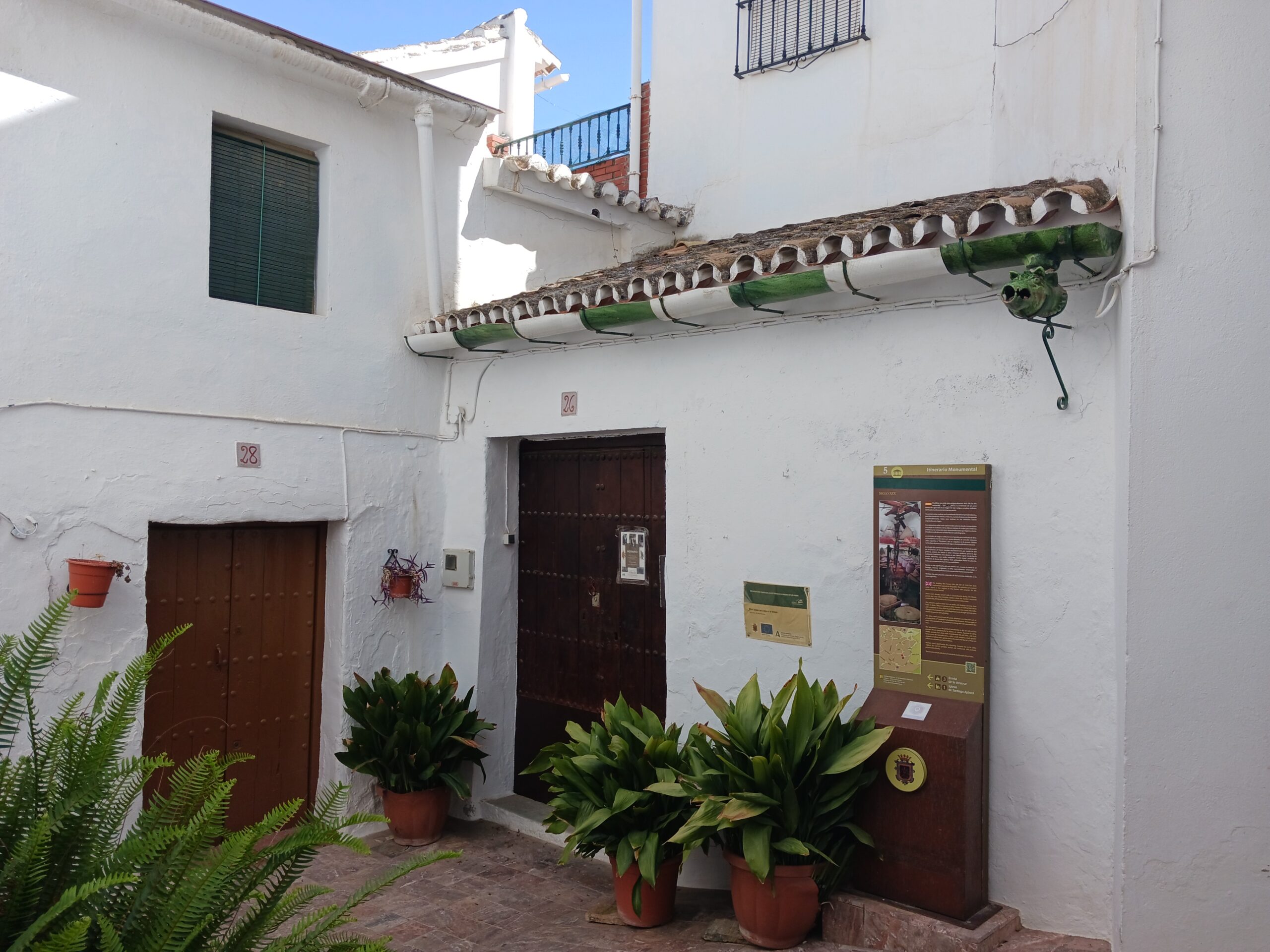
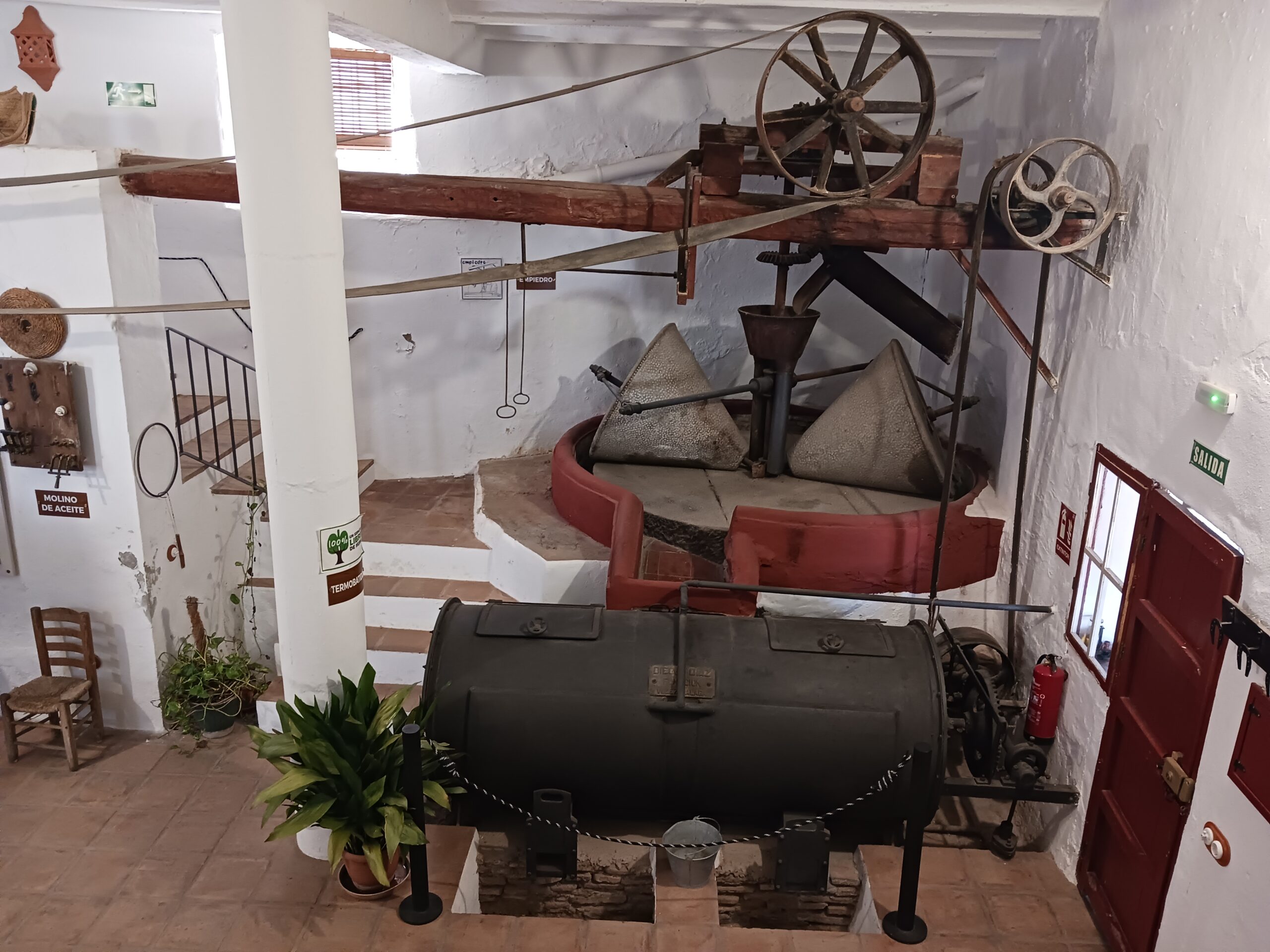
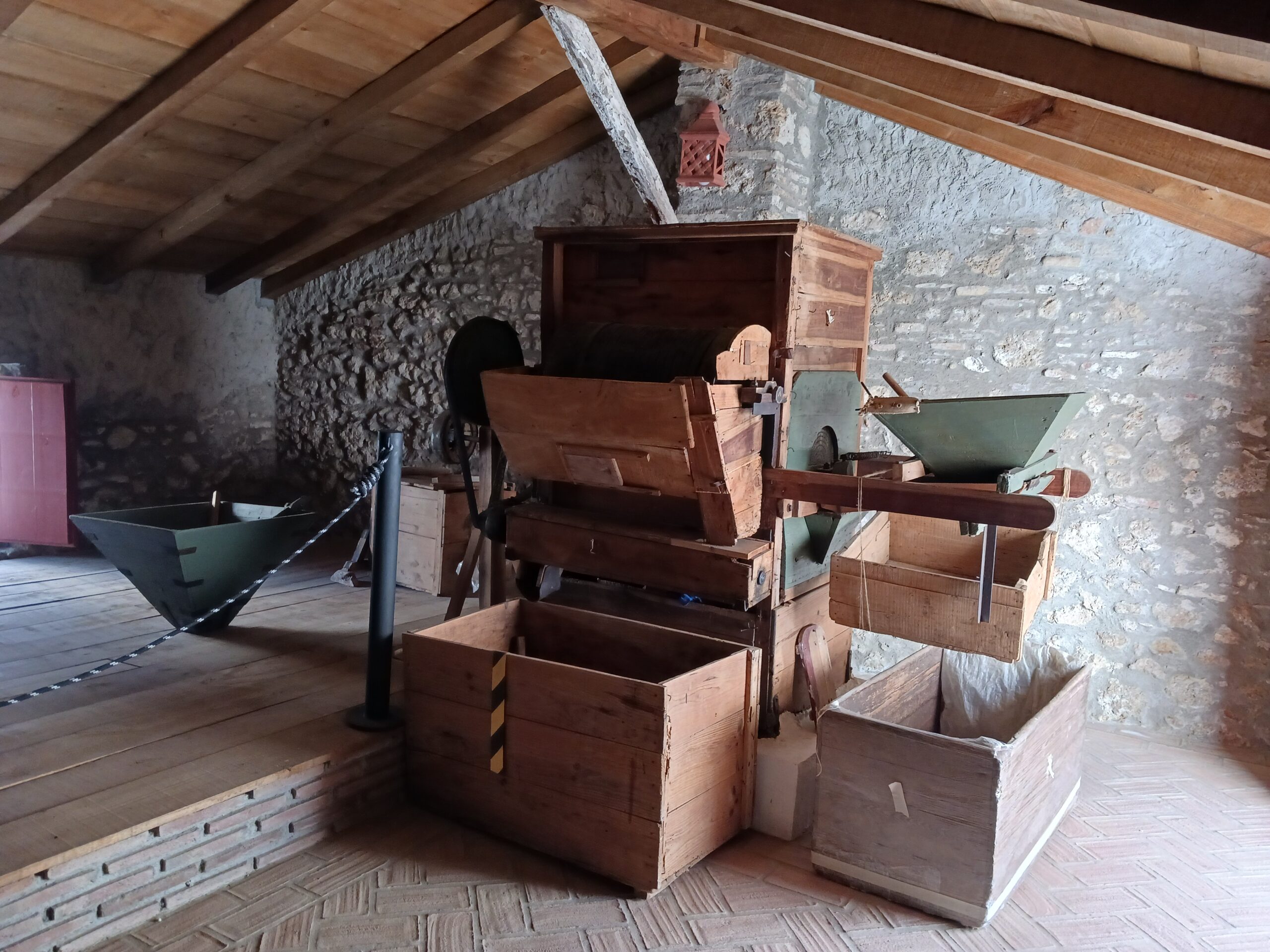
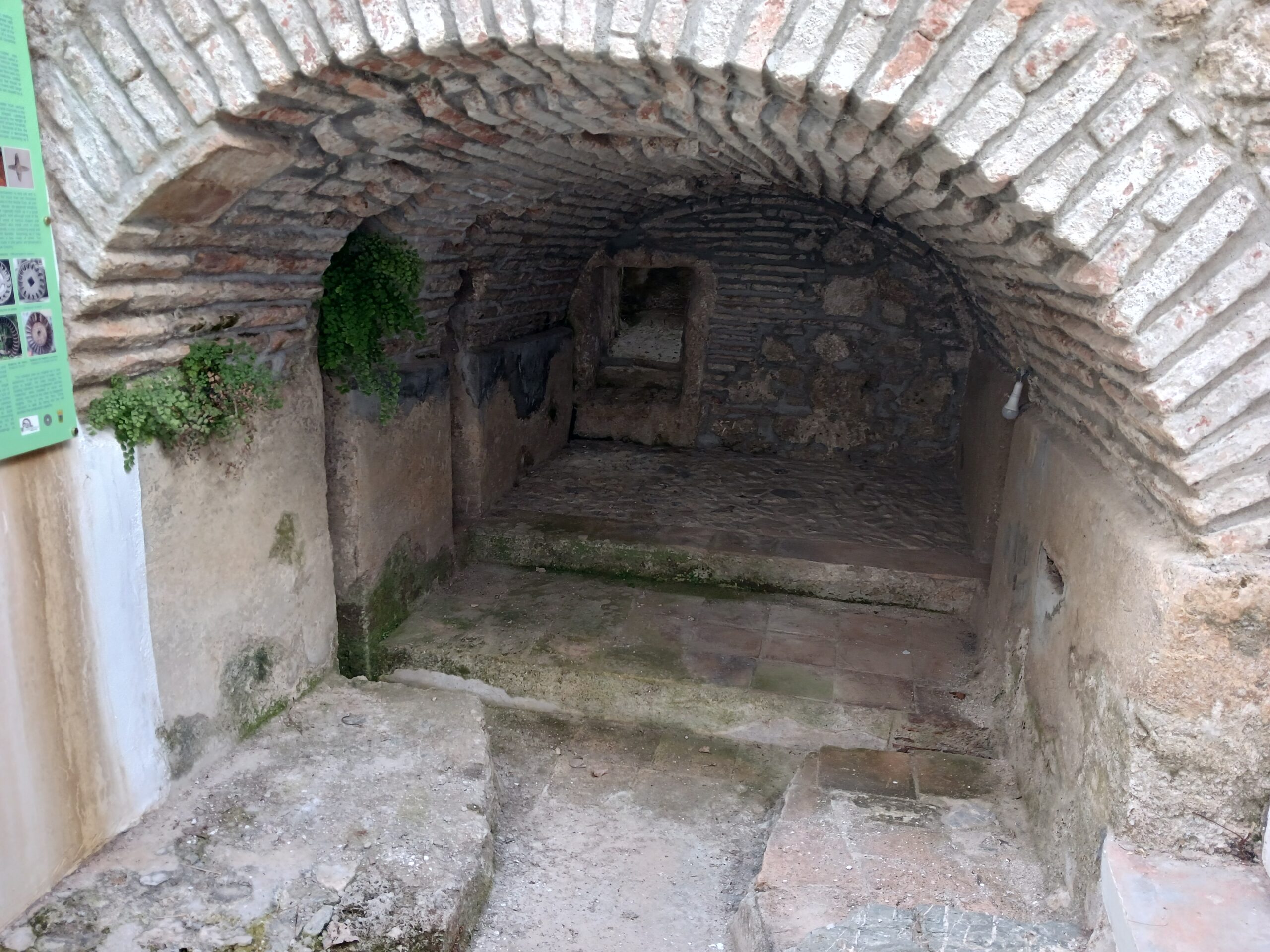

Also known among locals as Molino de los Mizos. It is a combined oil and flour mill that began operating as a “blood mill” with a stone screw press, using animal power to extract the oil (later, machinery powered by electricity was used); and as a hydraulic flour mill, which harnessed the water from the stream that ran through the town center to turn its two millstones, facilitating the grinding of grain (one of its distinctive features).
The name Albaiva comes from the street of the same name, which in turn is derived from the Arabic “alboayba”: the gate facing Álora, which during the Nasrid period was known as Puerta Alboayba or Boayba, and also as the Postigo or Puerta Pequeñita; as recorded in the 1492 land distribution document.
All of its facilities have been restored and revitalized by the Casarabonela City Council, the Department of Tourism of the Regional Government of Andalusia, and with the full cooperation of the owners, in two phases of work: the first phase focused on the area used for olive oil production, and the second—and most recent—phase focused on the area occupied by the flour mill.
Cl. Albaiva n24, Casarabonela
High
Media / Yes (schedule)


 Mancomunidad