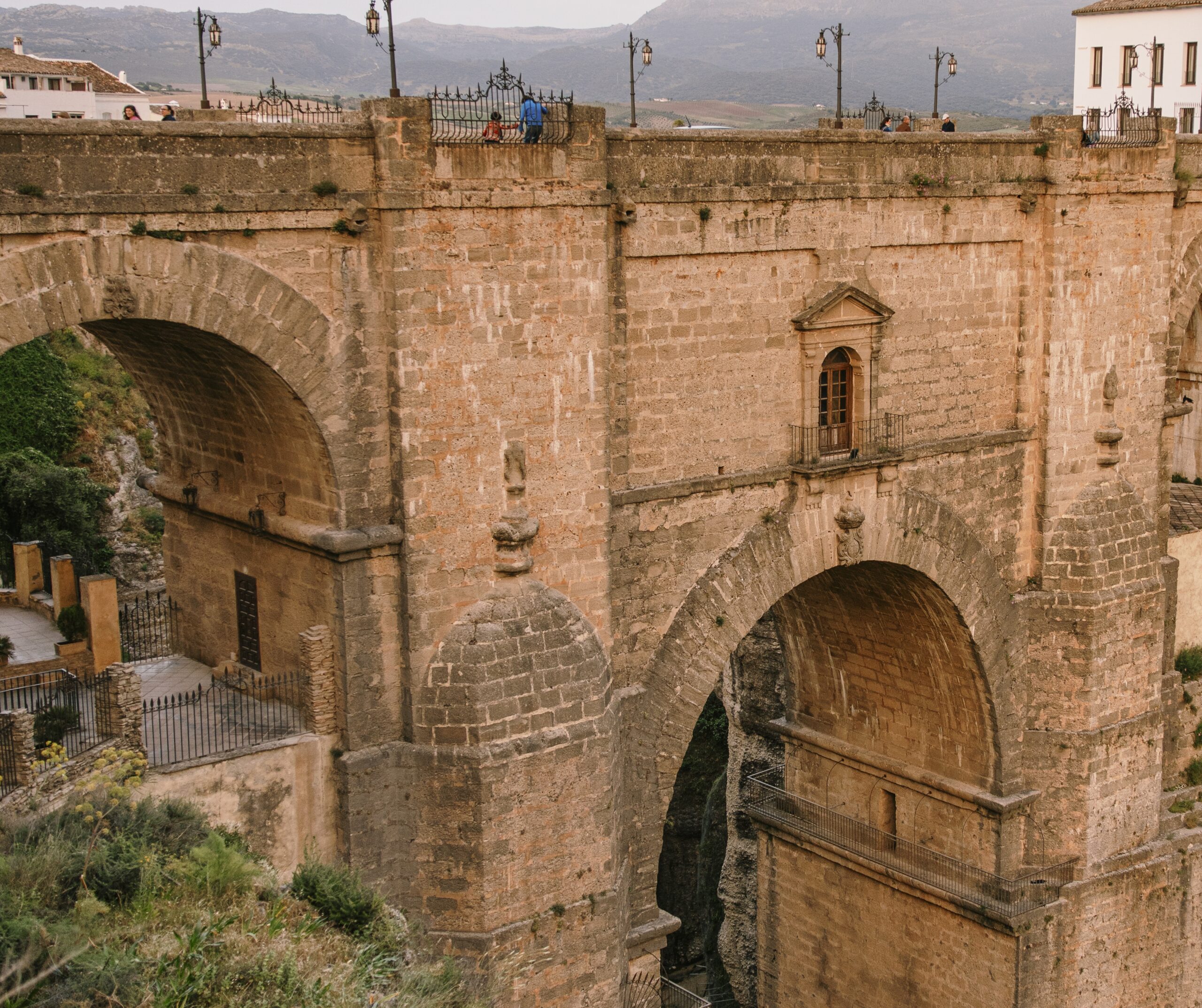

This interpretive space is located inside the Puente Nuevo, specifically in a room situated above the central arch, which in the past served various purposes, including as a prison. It tells the fascinating story of this bridge, which—beyond being a marvel of 18th-century engineering and technology—at the height of the Enlightenment—has become a true symbol of the city. There, we’ll be able to learn all about its history and values.
In the 18th and 19th centuries, Ronda was a highly sought-after destination for Romantic writers and travelers, who featured the Puente Nuevo in many of their works, thereby introducing it to the world. Notable among these are the illustrations by Louisa Tenison in 1853 and by Gustav Doré in 1870, among many others.
The Puente Nuevo not only connects the city’s two banks—not only linking the old part, the Ciudad neighborhood, with the new part, the Mercadillo neighborhood—but it also brings together past, present, and future generations of Ronda residents. Since its inauguration in 1793, it has been a silent witness to numerous historical events and the daily lives of the people of Ronda, remaining in the collective memory for more than two centuries. For all these reasons, the Puente Nuevo is, in essence, the soul of Ronda—a true symbol of the city.
Plaza de España, s/n
Sign Up
Not accessible to people with limited mobility / Open to the public / Yes (hours): Monday through Friday: 10:00 a.m. to 6:00 p.m.; Saturdays, Sundays, and holidays: 10:00 a.m. to 3:00 p.m.


 Mancomunidad