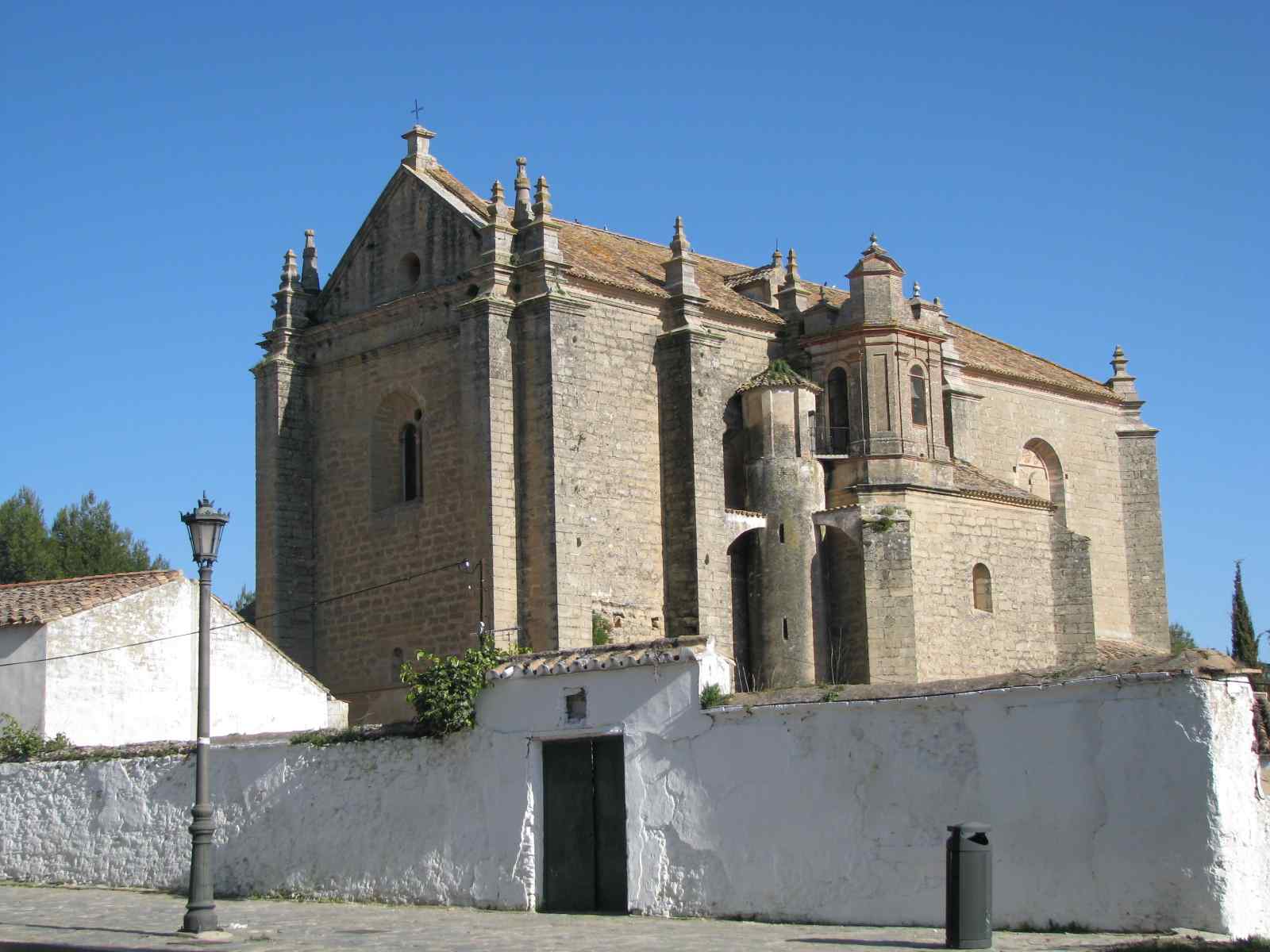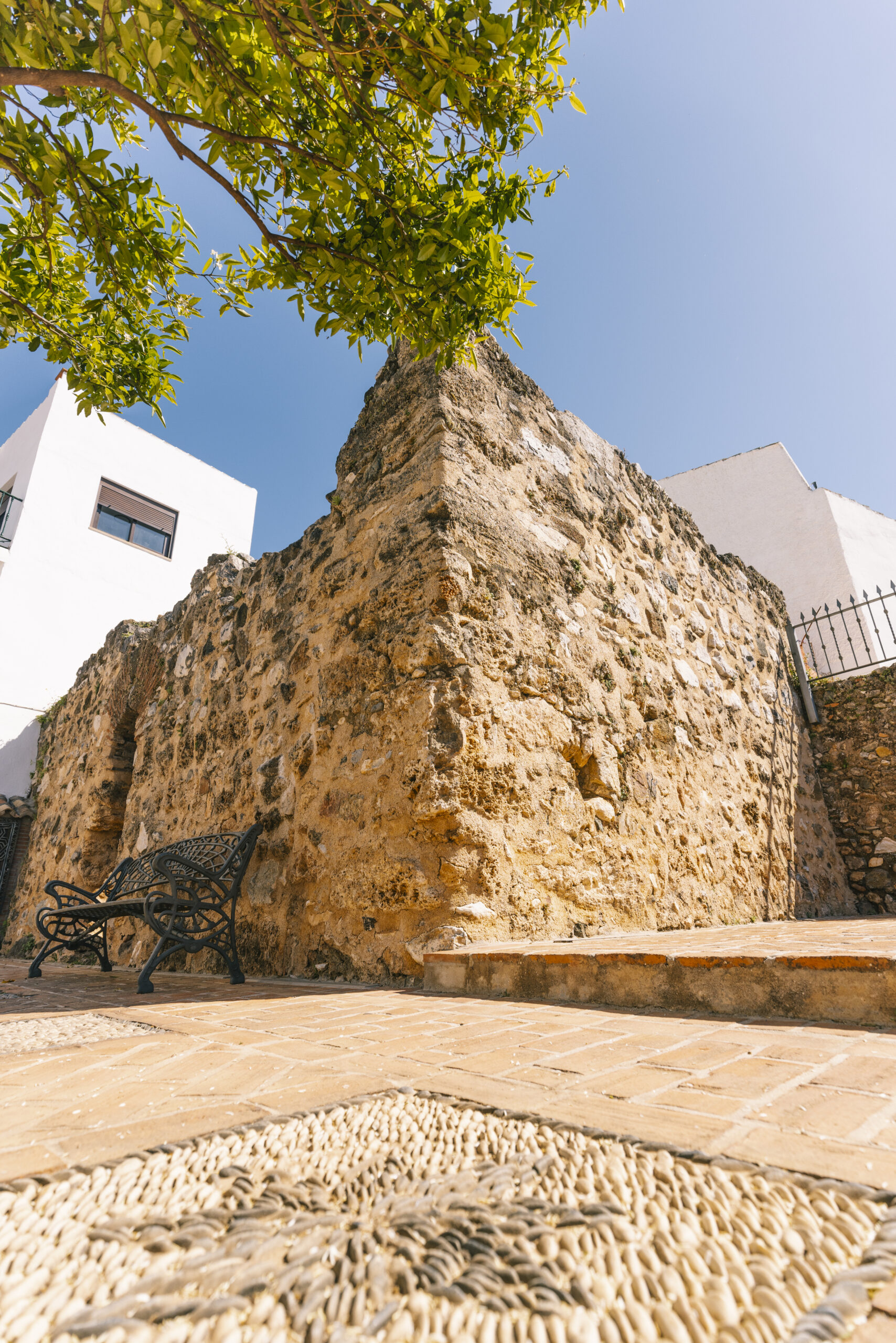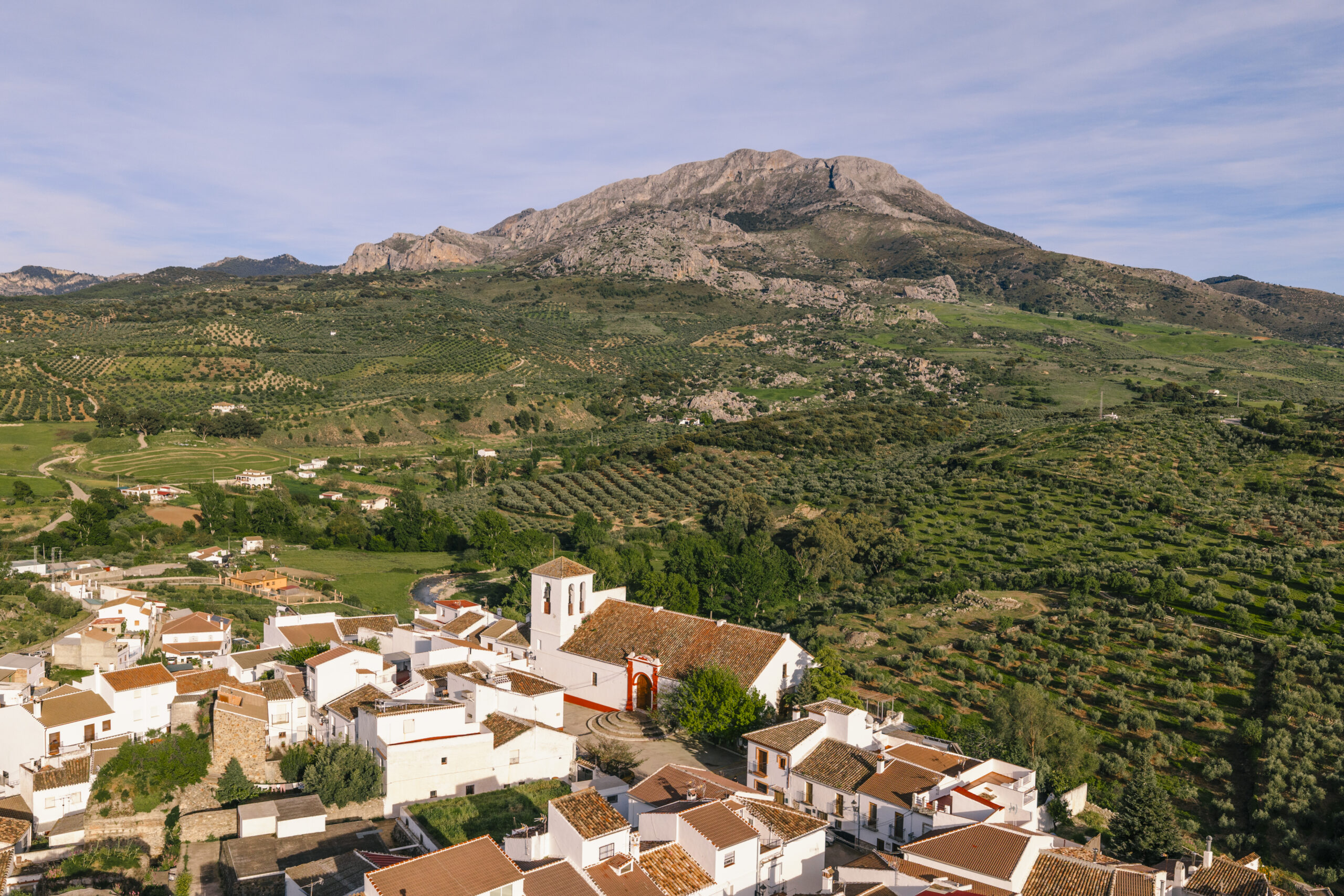
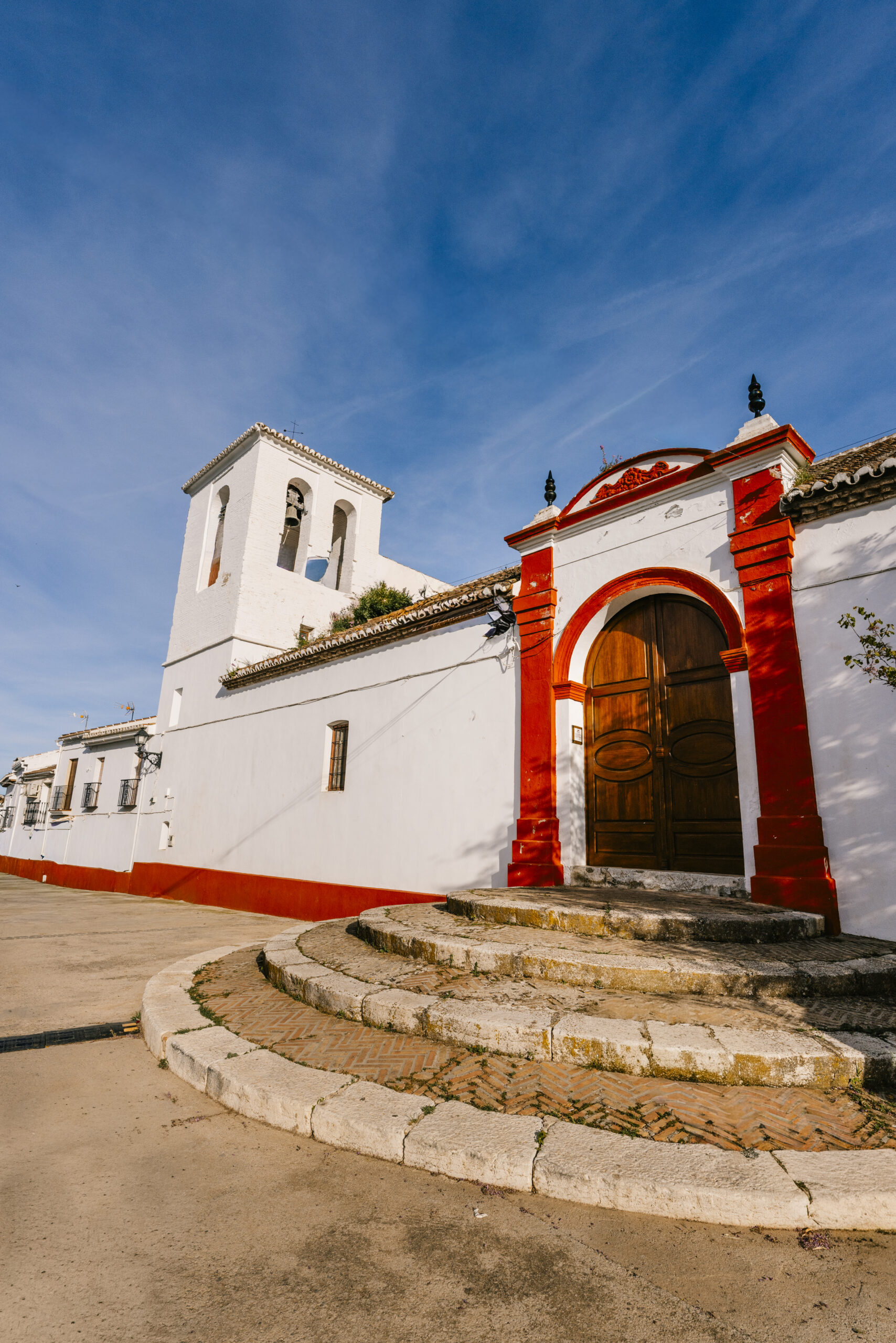

Located in the Plaza de la Villa, this building not only serves a religious purpose but also stands as a silent witness to the historical and cultural transition of the area that began in the late 15th century, following the Castilian conquest in 1485. Its location is no coincidence, as it stands on the highest point of the town center, occupying the site where a Nasrid mosque-fortress once stood, giving it a commanding view of the mountainous landscape surrounding the town.
Its exterior appearance is notable for a simplicity that can be deceptive. The main façade has an austere aesthetic, centered on a slightly pointed arch with simple jambs. However, it is on its sides and in its tower that the architectural complexity begins to become more apparent. The bell tower is undoubtedly the most visible feature from a distance. Its upper section, built of brick, features a series of semicircular arches on each of its sides, with the distinctive feature that on one of its facades these arches are duplicated in parallel, creating a rhythmic visual pattern typical of the mudéjar tardío style.
The building’s north facade deserves special mention for its distinctive design. Access is via a semicircular staircase leading to a semicircular arch flanked by pilasters in deep red tones. This color contrast, combined with the decorative spear-shaped pinnacles that crown the structure, breaks up the monochromatic appearance of the rest of the building.
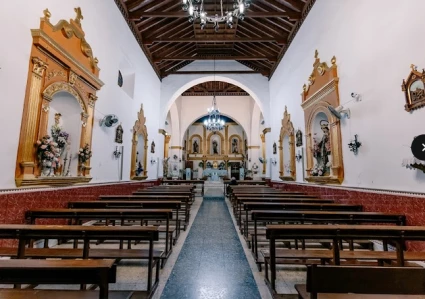
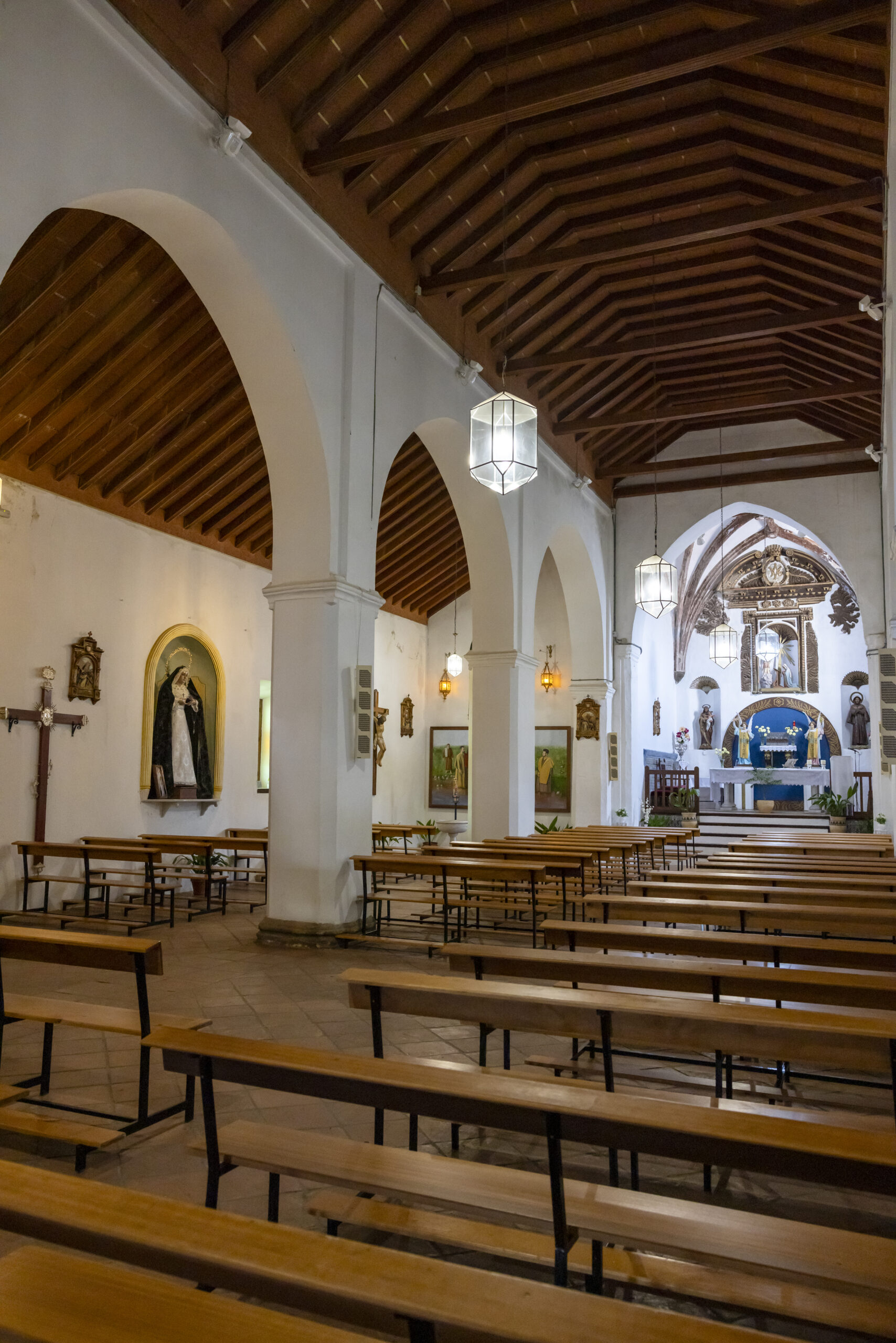
The interior space is organized into three well-defined naves, separated by chamfered pillars that support pointed arches framed by an alfiz. The central nave makes the greatest visual impact due to its wooden ceiling, a coffered ceiling that has been carefully preserved and showcases the mastery of “carpintería de lo blanco” (white woodworking).
In the chancel area, the structure transitions into a Renaissance-style barrel vault, indicating that the church underwent renovations or expansions in periods following its original construction. This mix of ceiling materials—wood in the naves and stone or stucco in the apse—creates a unique atmosphere that is highly valued by experts in ecclesiastical heritage.
The parish church houses a collection of religious sculptures and altarpieces that alone make a visit worthwhile, notably a statue of Jesús de Nazareth and a Virgen de los Dolores.
Plaza de la Villa n29, El Burgo
High
Registration / Yes (schedule)

 Mancomunidad